
Digital Humanism
Technology profoundly shapes the world we live in, and the stakes are high. Digital Humanism deals with digital technology development and policies based on human rights, democracy, inclusion, and diversity.
Digital Humanism unites the efforts of disciplines that traditionally do not collaborate. Together, we fulfill our societal obligation to develop and use technology responsibly.
Digital Humanism is a mindset, a philosophy, a political driving force, a scientific approach, and, most of all, a promise to society. Rooted in the Vienna Manifesto on Digital Humanism, our activities position human values, responsibility, and inclusion as guiding principles for the development and deployment of technology. It is a commitment to shaping, governing, and advancing technology in ways that serve people and contribute to a better future for all.
By bringing technological innovation and societal concerns into dialogue, Digital Humanism seeks to ensure that technological progress remains aligned with human needs and the common good. It embodies the shared vision expressed in TU Wien’s mission statement, Technology for People, and our faculty’s guiding principle, Dedicated to Excellence, Committed to Society: advancing outstanding research and education that create tangible benefits for people and society.
Milestones
Since the Vienna Manifesto on Digital Humanism was introduced in 2019, the Digital Humanism movement has continued to grow:
- 2026: Founding of the Center for Digital Humanism Vienna
- 2025: First Digital Humanism Summer School in Africa, Digitalization and Us (Open Access Textbook), Digital Humanism Lectures for Doctoral Students at TU Wien
- 2024: Vienna Doctoral College on Digital Humanism
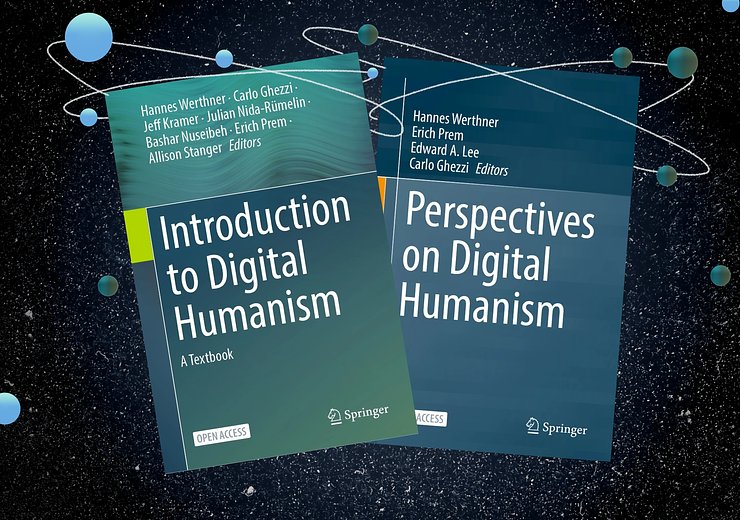
- 2023: UNESCO Chair on Digital Humanism, Introduction to Digital Humanism (Open Access Book)
- 2022: First Summer School on Digital Humanism
- 2021: Perspectives on Digital Humanism (Open Access Book)
- 2020: Start of the Digital Humanism Lecture Series
- 2019: Vienna Manifesto on Digital Humanism, Master Lectures at TU Wien Informatics
Highlights


Research and Education
Digital Humanism at TU Wien is reflected in a research approach that considers technological development together with its societal, ethical, and human implications.
It emphasizes the importance of critically reflecting on emerging technologies, understanding their potential impacts, and ensuring that decisions about their direction are not shaped by experts alone, but involve diverse perspectives from across society.
Key questions include how technologies can be developed and deployed in ways that are inclusive, responsible, and aligned with human values; how participation and diversity can contribute to equitable outcomes; and how to identify areas where ethically employed technologies can create the greatest positive impact.
The Digital Humanism initiative spans a wide range of educational outreach activities across nearly all levels of education. At the university level, a Master’s course on Digital Humanism was established following the first Vienna Workshop on Digital Humanism.
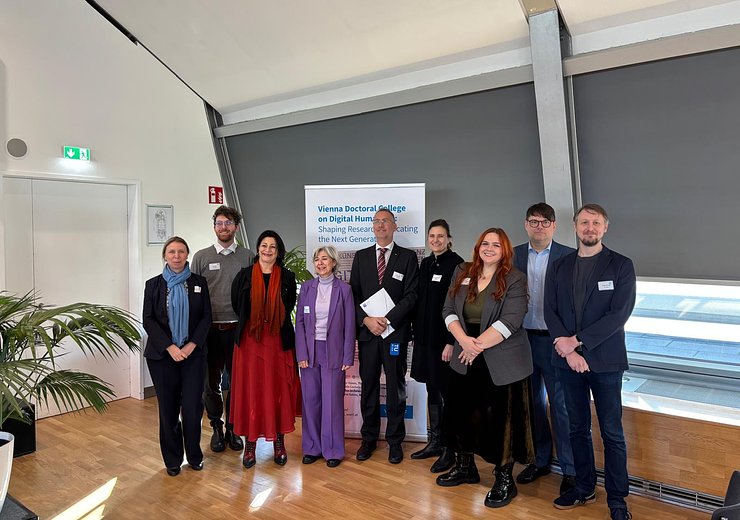
Building on this, the Vienna Doctoral College on Digital Humanism, a joint initiative of TU Wien, the University of Vienna, the Vienna University of Economics and Business, the Vienna Science and Technology Fund (WWTF), and the City of Vienna, was established in 2024. The doctoral training program is dedicated to critically examining and shaping the digital transformation of society by fostering interdisciplinary research that bridges computer science, social sciences, and the humanities. The Doctoral College aims to cultivate a new generation of scholars equipped to understand, navigate and positively influence the complex interplay between technology and society.
Beyond degree programs, the Digital Humanism Summer School has become a leading initiative for interdisciplinary exchange, with growing international reach. At the same time, outreach activities extend into secondary education and lifelong learning, including the co-developed high school elective “Artificial Intelligence and Digital Humanism” at Gymnasium Stubenbastei and digital literacy courses at the Volkshochschulen Wien. Together, these initiatives form a continuous educational pathway that embeds Digital Humanism from early education to advanced research and public learning environments.
Our Partners. Alone we can do little – but together we can do much. Find our main players, cooperations and initiatives within and beyond TU Wien Informatics here. Their commitment and support make our efforts possible.
















We foster a wide range of Digital Humanism activities that explore the relationship between technology, society, and human values through education, research, and dialogue. By integrating ethical reflection, critical digital literacy, and participatory formats, these activities form a living ecosystem that includes the Digital Humanism lecture series, summer schools, and the Digital Humanism Fellowship Program, organized in cooperation with the Institute for Human Sciences.
Projects

UNESCO Chair
The UNESCO Chair on Digital Humanism aims to guide the development of digital technologies and policies toward human rights, democracy, participation, inclusion, and diversity. Established in 2023, it fosters interdisciplinary collaboration and builds connections among partners from research and education, industry, and civil society. Peter Knees and Julia Neidhardt are Chairholder and Co-Chairholder.

Euridice
The European Inclusive Education for Digital Society, Social Innovation and Global Citizenship (EURIDICE) project fosters a European ecosystem across academia, research, civil society, and industry to promote inclusive digital transformation. Initiated by the EU, it aims to usher Europe into the digital future by educating the next generation with the skills to shape fair, responsible, and sustainable digital futures.

EUDHIT
The European Digital Humanism Initiative (EUDHIT), funded by the EU, aims to strengthen societies by promoting Digital Humanism as a foundation for democratic and inclusive digital futures. Bringing together researchers, policymakers, industry, and civil society, it supports Europe’s capacity to shape the digital transformation in line with human values, ensuring technological innovation contributes to human dignity, freedom, and democracy.
Center for Digital Humanism Vienna
As digital technologies reshape how we live, work, and interact, fundamental questions about their role in society are becoming increasingly urgent.
In 2026, TU Wien, The University of Vienna, the Vienna University of Economics and Business, and the Central European University joined forces to establish the Center for Digital Humanism to explore these questions across disciplines.
The research center is taking shape as a collaborative space for research, education, and public engagement. It builds on the interdisciplinary research in the field of digital humanism and translates its principles into practical approaches for the development and use of technologies. As a partner for society, policymakers, industry, and education, the center will provide state-of-the-art research and practical guidelines. It will serve as an open forum beyond the traditional lecture room, hosting workshops, talks, and cultural events that encourage dialogue and collaboration around digital humanism.
Rooted in a growing research ecosystem, the new center will help shape global discussions on the development of digital technology and is supported by the City of Vienna and the Federal Ministry of Women, Science and Research
UNESCO Chair

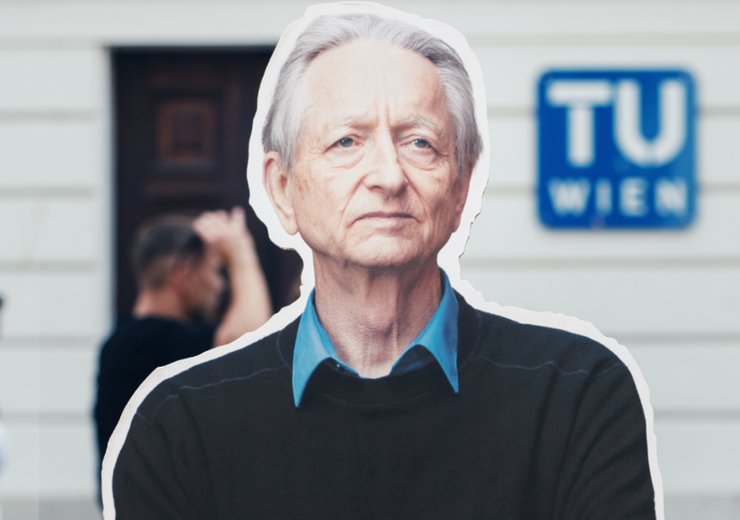
Picture: Amélie Chapalain / TU Wien Informatics
The UNESCO Chair on Digital Humanism aims to shape the development of digital technologies and policies toward human rights, democracy, participation, inclusion, and diversity.
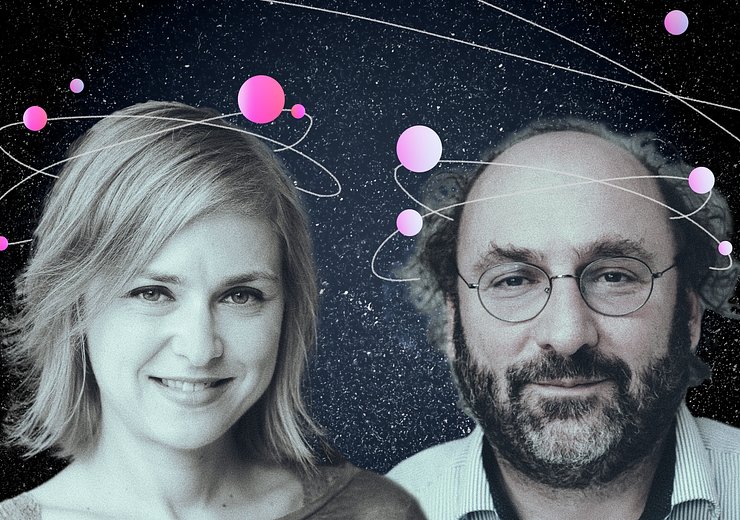
Established in 2023, the Chair is held by Peter Knees and Co-Chairholder Julia Neidhardt
The Chair supports interdisciplinary collaboration in research and education, strengthens links with partner universities worldwide—particularly in the Global South—and contributes to integrating Digital Humanism perspectives into teaching curricula and technical courses at TU Wien. It also promotes reflection on ethical research practices aligned with UNESCO’s Recommendation on Ethics of Artificial Intelligence, facilitates exchange on emerging research agendas, and serves as a point of connection for partners and activities within the international Digital Humanism initiative and our Center for Artificial Intelligence and Machine Learning (CAIML).
Contact
Want to talk to real people about the challenges we face? Here are the leading experts and primary contacts for all our Digital Humanism initiatives.

Past Events
Recent highlights, events, and news from all our Digital Humanism initiatives.
Want more? Head over to our
Newsroom!





Want more? Head over to our Newsroom!
In the News
Here you’ll find the latest media coverage with our experts:
2026
- Peter Knees, Hannes Werthner / Neues Zentrum für Digitalhumanismus / science.orf.at / Jun 24, 2026
- Katta Spiel / Neuer Vorsitz im Monitoringausschuss / OTS / Apr 23, 2026
- Paweł W. Woźniak, Katta Spiel, Paul Panek / Kooperation TU Wien - BSVÖ im Sommersemester für gelebte Inklusion / BSVÖ / Mar 27, 2026
- René Röpke, Hannes Werthner / Informatik, das Latein des 21. Jahrhunderts? / Die Presse / Mar 13, 2026
- Julia Neidhardt / Technik mit Verantwortung? Möglichkeiten und Grenzen in Zeiten von KI und Digitalisierung / BMFWF / Feb 26, 2026
- Gerti Kappel / Informatik – (k)ein Fach für Frauen? / Der Standard / Feb 14, 2026
2025
- Nysret Musliu / TU Wien lädt zu „AI-Festival“ / wien.orf.at / Dec 3, 2025
- Nysret Musliu / KI kein Ersatz für Forscherinnen und Forscher / science.orf.at / Dec 2, 2025
- Zeta Avarikioti / TU-Wien-Forscherin Georgia Avarikioti erhält Hedy-Lamarr-Preis 2025 / OTS / wien.orf.at / Oct 16, 2025
- René Röpke, Laura Kovacs / TU Wien eröffnet eduLAB für Kinder und Jugendliche / OTS / Sep 30, 2025
- Katta Spiel / Barrierefreiheit: Universitäten als Arbeitsplatz / Ö1 Mittagsjournal / Sep 26, 2025
- Sabine Theresia Köszegi / US-Datenkrake:„Wir verkaufen uns und lassen uns steuern“ / krone.tv / Wiener Wissen / Jun 16, 2025
- Gerti Kappel / Arbeitslos durch KI / Ö1 / Digital.Leben / Jun 12, 2025
- Gerti Kappel / Über wieviel digitale Kompetenz verfügen wir? / Ö1 / Science Arena / Jun 2, 2025
- Walter Palmetshofer / KI im Alltag: Zwischen Hilfe und Risiko / ORF.at / May 31, 2025
- Hannes Werthner / Digitaler Humanismus von KI gefordert / ORF.at / May 27, 2025
- Hannes Werthner / Gerechtigkeit und Grundrechte – Konferenz zum Digitalen Humanismus / OTS and ORF kulturMontag / May 26, 2025
- Peter Knees / Zukunft der Forschung: „Wir müssen weg vom isolierten Silo-Denken“ / krone.tv / Wiener Wissen / May 4, 2025
- Gerti Kappel / Häupl ganz offen: „Bieten Forschern, die vor Trump fliehen, Asyl an“ / krone.tv / Wiener Wissen / Apr 20, 2025
- Erich Prem / Digitalisierung: So werden wir nicht überrollt / krone.tv / Wiener Wissen / Apr 7, 2025
- Geraldine Fitzpatrick / Fit for People, Fit for Purpose: Designing Tech that Matters / Communications of the ACM / Jan 21, 2025
- Hannes Werthner / “Ich trenne nicht zwischen Humanismus und Digitalem Humanismus” - Renata Schmidtkunz im Gespräch mit Hannes Werthner / Ö1 Im Gespräch / Jan 17, 2025
2024
- Stefan Woltran, Julia Neidhardt / Warum der Chatbot wie ein Mann „denkt“ / Wiener Zeitung / Dec 2, 2024
- Peter Knees / Digitaler Humanismus: Neues Doktoratskolleg an drei Wiener Unis startet / Stadt Wien, Presse-Service / Oct 28, 2024
- Peter Knees / KI-Experimente fordern “weiße” Musik heraus / ORF TOPOS / Oct 4, 2024
- Clemens Heitzinger / Digital Future Projects for the Job Market of the Public Employment Service Austria (AMS) / Expert Panel / Sep 3, 2024
- Ivona Brandic / Im Park streamen ist für das Klima schlechter als daheim / Wiener Zeitung / Jul 27, 2024
- Ivona Brandic / Stromhunger der KI / Ö1 Mittagsjournal / Jul 4, 2024
- Peter Knees / Profit von Tech-Konzernen zurückholen / Kurier / Jun 28, 2024
- Matteo Maffei / Die Chatkontrolle ist ein Sicherheitsrisiko für ganz Europa / Der Standard / Jun 19, 2024
- Daniela Rus / Intelligente Roboter werden uns Superkräfte verleihen / Der Standard / Jun 9, 2024
- Daniela Rus / Wie intelligente Roboter den Alltag verändern könnten / Ö1 Mittagsjournal / May 28, 2024
- Daniela Rus / Künstlich intelligente Roboter / Ö1 Digital.Leben / May 28, 2024
- Peter Knees / Gefährdet KI unsere Demokratie? / Digital.Leben Ö1 / Jan 18, 2024
2023
- Clemens Heitzinger / Algorithmus statt Arzt? Künstliche Intelligenz in der Medizin / Ö1 Journal Panorama / Nov 28, 2023
- Emanuel Sallinger / KI-Technologie: Damit Mist kein Unrat wird / Kurier / Nov 23, 2023
- Agata Ciabattoni / Künstliche Intelligenz: Ethikunterricht für KI-Systeme / Kurier / Nov 22, 2023
- Peter Knees / KI und Menschenrechte / dimensionen.diskussionen Ö1 / Nov 16, 2023
- Georg Gottlob / Künstliche Ignoranz / Digital.Leben Ö1 / Nov 7, 2023
- Julia Neidhardt / Künstliche Intelligenz: Der gefilterte Blick auf die Welt / Kronen Zeitung / Oct 20, 2023
- Lukas Grasmann, Nysret Musliu / Künstliche Intelligenz weiß, was du morgen einkaufen willst / Kurier, Futurezone / Sep 11, 2023
- Peter Knees / Der Kampf gegen die digitale Ohnmacht / Die Presse / Aug 27, 2023
- Georg Gottlob / Man muss es nicht künstlich intelligent nennen / ORF.at / Aug 27, 2023
- Thomas Eiter / Verschläft Politik die KI-Revolution / Café Puls, Puls 4 / Jun 19, 2023
- Julia Neidhardt / Made by KI: Wie Künstliche Intelligenz die Mode- und Beautyindustrie verändert / MISS / May 19, 2023
- Peter Knees, Julia Neidhardt / UNESCO-Lehrstuhl für “Digitalen Humanismus” an TU Wien eingerichtet / Salzburger Nachrichten / May 16, 2023
- Peter Knees, Julia Neidhardt / “Digitaler Humanismus” – UNESCO-Lehrstuhl an TU Wien eingerichtet / APA Science / May 16, 2023
- Julia Neidhardt / Wie Künstliche Intelligenz für “glückliche Zufälle” sorgen kann / Nerds mit Auftrag, APA Science / Apr 27, 2023
- Peter Knees / Ist künstliche Intelligenz bald klüger als wir? / Der Standard / Apr 17, 2023
- Peter Knees / Die Macht der KI lässt sich begrenzen / Trend / Apr 7, 2023
- Sabrina Burtscher / Wie queer „denkt“ künstliche Intelligenz? / ORF.at / Mar 21, 2023
- Emanuel Sallinger / Grenzen künstlicher Intelligenz kritisch hinterfragen / Der Standard / Mar 16, 2023
- Stefan Woltran / Wie kann man das Internet noch retten? / Wiener Zeitung / Mar 15, 2023
- Julia Neidhardt / KI hängt fest in Genderklischees / ORF.at / Mar 12, 2023
- Clemens Heitzinger / ChatGPT: Revolutionär oder gefährlich? Arbeit, Bildung, Medien: Kann uns „KI“ ersetzen? / Puls 4, Café Puls / Mar 6, 2023
- Peter Knees / Immer mehr KI-Jobs: Erstmals Stelle als “KI-Flüsterer” ausgeschrieben / Der Standard / Jan 31, 2023
- Stefan Woltran / Man kann die Entwicklung menschlicher Intelligenz nicht von der Evolution trennen / roadmap2050.at / Jan 25, 2023
- Julia Neidhardt / Algorithmische Diskriminierung: Das Problem von KI und Vorurteilen / Radio FM4, Stories / Jan 20, 2023
- Peter Knees / Künstliche Intelligenz: Die Revolution der KI / News / Jan 11, 2023