
Please note that Minister Eva-Maria Holzleitner will unfortunately no longer be able to attend the event due to recent political developments. We appreciate your understanding and look forward to welcoming you to an insightful evening with an excellent panel of speakers joining us.
She goes AI. We are AI.
Join us on October 7 with Dean Gerti Kappel and Minister for Women, Science and Research Eva-Maria Holzleitner to celebrate female excellence in AI!
- –
-
TU Wien, Campus Gußhaus
Arnold Schmidt Raum -
1040 Vienna, Gußhausstraße 27-29
Stiege 1, 6. Stock, Raum CD0603 -
This event requires registration.
See description for details.

About
In a world where AI is reshaping the landscape of science, the voices of women are more crucial than ever. Join us on October 7, together with TU Wien Informatics Dean Gerti Kappel, and Minister for Women, Science and Research Eva-Maria Holzleitner for an event that explores the intersection of AI, scientific excellence, and the pivotal role of women in science and driving innovation. Through keynotes and discussions, we will highlight how women are actively shaping the future of AI and scientific research.
- When: Wednesday, October 7, 17:00 - 19:00
- Where: Arnold Schmidt Raum, Gußhausstraße 27-29, 1040 Wien
We offer sign language interpretation and childcare for this event
We provide sign language interpretation (“ÖGS-Dolmetsch”) for this event. We further offer professional childcare at Seminarraum 384 (Gußhausstraße 27-29, 1040 Wien, room CD0204) for children over the age of 3 from 16:30-19:30. If you have any questions, please email us at communications@informatics.tuwien.ac.at or call +43 664 605 882 445.
Registration
Attendance is free but registration is required.
Program
| Time | Topic |
|---|---|
| 17:00–17:05 | Opening and Welcome Address by Jens Schneider (Rector of TU Wien) |
| 17:05–17:10 | Welcome Address by Susanne Buck (Head of the Department for Technical Universities, STEM and Sustainability, Federal Ministry of Women, Science and Research) |
| 17:10–18:00 | Panel Discussion moderated by Gerti Kappel |
| With panelists Agata Ciabattoni (TU Wien Informatics), Tatjana Chavdarova (TU Wien Informatics), Maria Christakis (TU Wien Informatics), Fariba Karimi (TU Graz), Bettina Könighofer (Graz University of Technology), Julia Neidhardt (TU Wien Informatics) | |
| 18:10–18:20 | AI Regulation and Ethics-driven AI Governance – The European Way |
| Gerti Kappel in conversation with Krisztina Rozgonyi (AIT) | |
| 18:20–18:30 | Presentation Video Campaign “She goes AI. We are AI” |
| 18:30 | Networking |
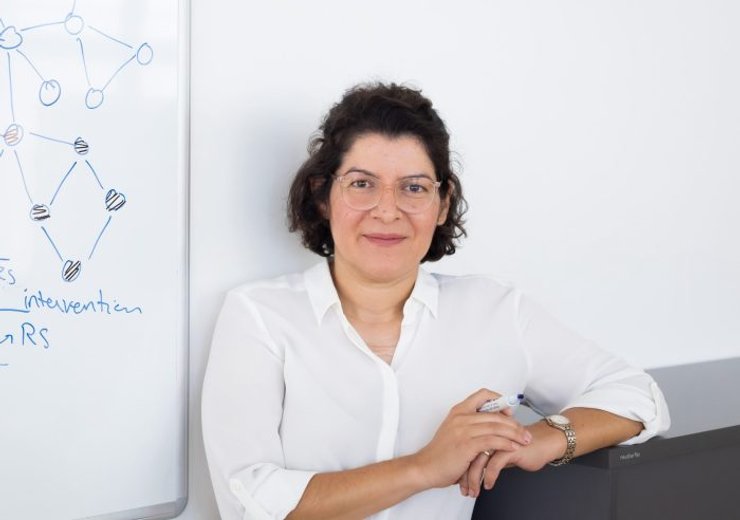


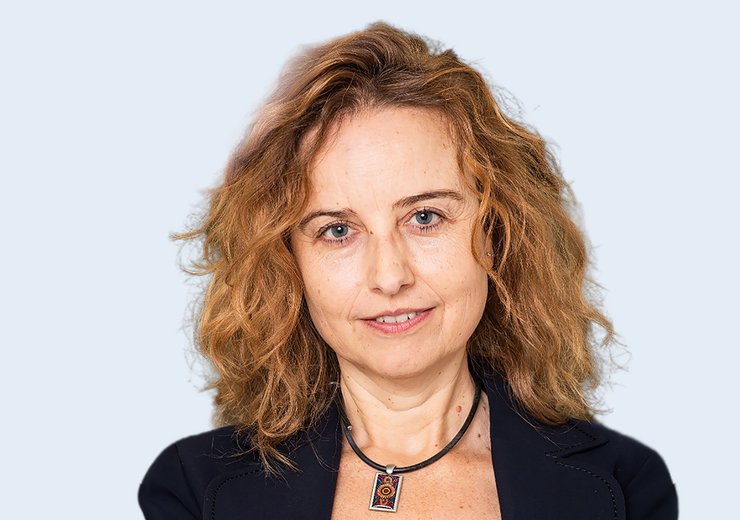
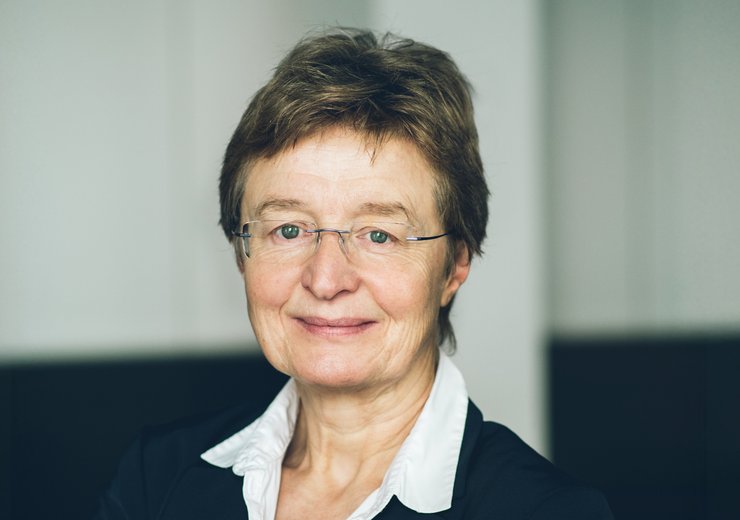
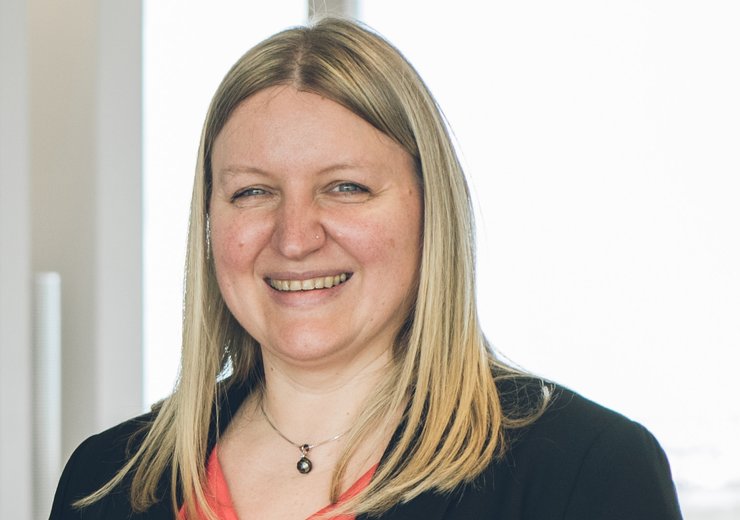

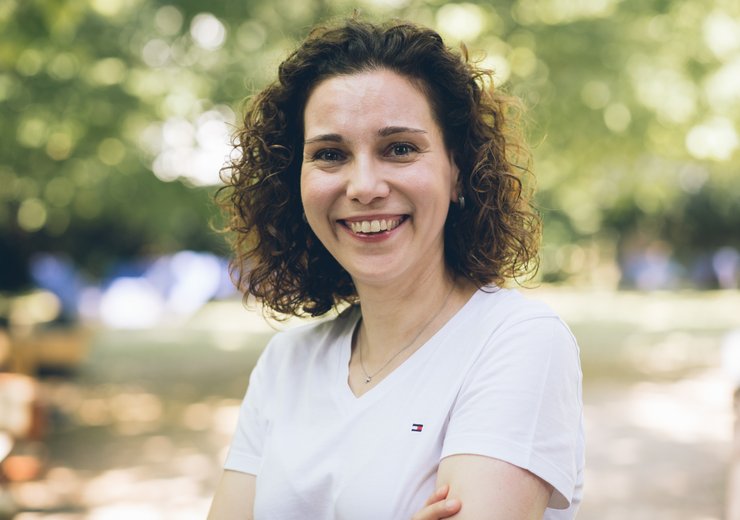
Participants on Stage
Agata Ciabattoni
Agata Ciabattoni is Professor and Head of the Research Unit Theory and Logic at TU Wien Informatics. She serves as a board member of the cluster of excellence Bilateral AI, and as co-chair of the Vienna Center for Logic and Algorithms (VCLA). She is currently leading various AI projects including the WWTF-funded projects Training and Guiding AI Agents with Ethical Rules (TAIGER) and Acquiring and explaining norms for AI systems (AXAIS), as well as the project Logical methods for Deontic Explanations (LoDEx), funded by the Austrian Science Fund FWF. She is also a recipient of the FWF START Prize 2011, the highest Austrian award for early-career researchers.
Bettina Könighofer
Bettina Könighofer is assistant professor of Formal Methods and Machine Learning at Graz University of Technology. Her research interests lie primarily in the area of reinforcement learning, formal verification, model checking, and runtime monitoring and enforcement. Bettina founded the group Trusted AI, and in her research, she and her group are using state-of-the-art formal methods to test, to verify, and to monitor AI systems with the goal to make sure that AI systems are safe, secure, transparent, accountable, robust, and unbiased. Bettina’s research was the first that provided provable correctness guarantees for deep learning systems.
Gerti Kappel
Gerti Kappel is full professor at the Institute of Information Systems Engineering at TU Wien, in the Business Informatics Group. Prior to that, from 1993 to 2001, she was a full professor of computer science (database systems) and head of the Department of Information Systems at the Johannes Kepler University Linz. From 2016 to 2019, she was a member of the dean’s team of the Faculty of Informatics responsible for research, diversity, and financial affairs. Since the beginning of 2020 she acts as the dean of the Faculty of Informatics at TU Wien. Her current research interests include Model Engineering, Web Engineering, and Process Engineering, with a special emphasis on cyber-physical production systems. Striving for the unity of research and teaching, she co-authored and co-edited among others „UML@Work“ (dpunkt.verlag, 3rd ed, 2005), „UML@Classroom“ (Springer, 2015), and „Web Engineering“ (Wiley, 2006).
Tatjana Chavdarova
Tatjana Chavdarova is an Assistant Professor at the Research Unit Machine Learning, headed by Thomas Gärtner, at TU Wien Informatics. Her research focuses on the theoretical foundations of learning dynamics in multi-agent and game-theoretic machine learning. She received her PhD from EPFL and Idiap under the supervision of François Fleuret, with research stays at Mila (with Yoshua Bengio and Simon Lacoste-Julien) and DeepMind (with Irina Jurenka). She was a Postdoctoral Researcher at EPFL’s MLO Lab with Martin Jaggi and at UC Berkeley with Michael I. Jordan, and later a Visiting Professor at Politecnico di Milano, collaborating with Nicola Gatti and Nicolò Cesa-Bianchi. Her work has been supported by two Swiss National Science Foundation (SNSF) grants and, most recently, by the Vienna Science and Technology Fund (WWTF). She was an organizer of the NeurIPS 2025 workshop Dynamics at the Frontiers of Optimization, Sampling, and Games (DynaFront) and currently serves as President of Women in Machine Learning (WiML), the largest and oldest global non-profit organization for women in AI. Tatjana has served on the WiML board for over five years, including three years as Vice President.
Fariba Karimi
Fariba Karimi is a full professor of Social Data Science at Graz University of Technology and a faculty member of the Complexity Science Hub Vienna. In 2024, she received an ERC Starting Grant on the topic of Network Fairness. Before joining TU Graz, she served as a tenure-track professor at Vienna University of Technology. She leads the computational social science and algorithmic fairness lab. Her research interests revolve around modeling complex socio-technical networks and the role of AI and algorithms in the diffusion of information and in shaping structural inequalities, and devising computational tools toward algorithmic fairness. In 2023, she received the prestigious Young Scientist Award from the German Physical Society for her contribution to modeling minorities and inequalities in networks.
Julia Neidhardt
Julia Neidhardt is a researcher at the Research Unit Data Science with a background in mathematics and computer science. She was a guest researcher at the Austrian Academy of Sciences as well as visiting scholar at Northwestern University, USA, and at the University of Geneva, Switzerland. Her research focuses on user modeling and recommender systems in tourism and in the news domain, and on developing approaches to capture online opinion-forming and online behavior. In her research, she also focuses on Digital Humanism. Her research is published in highly renowned conference proceedings and journals including Nature Human Behaviour. She is regularly invited to give talks on topics related to her research, among others at the Oxford Women in Computer Science - Distinguished Speaker Series at the University of Oxford. Julia Neidhardt is a senior program committee member of the ACM Conference on Recommender Systems (RecSys)and is an associate editor of the Journal of Information Technology & Tourism as well as a distinguished reviewer of the newly established journal ACM Transactions on Recommender Systems (TORS). She is research track co-chair of ACM UMAP 2023, ENTER 2019 and ENTER 2020, and a co-organizer of a number of workshops and conferences. Julia Neidhardt is part of the Digital Humanism Initiative at TU Wien and board member of the Center for Artificial Intelligence and Machine Learning (CAIML). She leads the Christian Doppler Lab for Recommender Systems and since 2023, she also holds the UNESCO Co-Chair on Digital Humanism.
Krisztina Rozgonyi
Dr Krisztina Rozgonyi is a Senior Scientist at the Austrian Institute of Technology (AIT) within the Center for Innovation Systems & Policy. Her work focuses on infocommunication policy & societal transformations, digital platforms’ governance, AI ethics & policy change and the rule of law in governing transformations. She has a long track record as a senior international media, telecommunication and IP legal and policy expert, and worked with international and European organisations, with national governments, and regulators as an adviser on media freedom, spectrum policy and digital platform governance. Dr Rozgonyi is affiliated with the Institute for Comparative Media and Communication Studies (CMC) at the Austrian Academy of Sciences (ÖAW) with a research focus on comparative media systems and is a fellow with the policy platform at the Department of Communication of the University of Vienna.
Maria Christakis
Maria Christakis is a Professor and Head of the Research Unit Software Engineering at TU Wien Informatics. Her research focuses on automated testing, program analysis, software verification, and techniques for building more reliable software systems. Before joining TU Wien in 2022, she was a tenure-track faculty member at the Max Planck Institute for Software Systems in Germany. She previously held positions at the University of Kent, Microsoft Research, and ETH Zurich, where she completed her PhD. Christakis has received several competitive grants and distinctions, including an ERC Starting Grant, an ERC Proof of Concept Grant, an Ethereum Foundation Academic Grant, an Amazon Research Award, a Google Research Scholar Award, and a Facebook Faculty Research Award. She is also a member of the Young Academy of the Austrian Academy of Sciences and received the ACM-W Rising Star Award for her research contributions to computing.
Photographs and/or video will be taken at this event. By attending, you grant TU Wien Informatics full rights to use the material (and any reproductions or adaptations) for fundraising, publicity, or other purposes. This may include (but is not limited to) the right to use in our print and online publicity, social media, press releases, and funding applications. If you wish that no photographs explicitly depicting you are used for these purposes, please send us an informal message. — Thank you!
Curious about our other news? Subscribe to our news feed, calendar, or newsletter, or follow us on social media.