
Edge-AI Drone Inspection for Bridge Infrastructure
We’re delighted to announce that the project Intent-Driven Edge-AI Drone Inspection for Bridge Infrastructure has been selected for funding by the FFG!
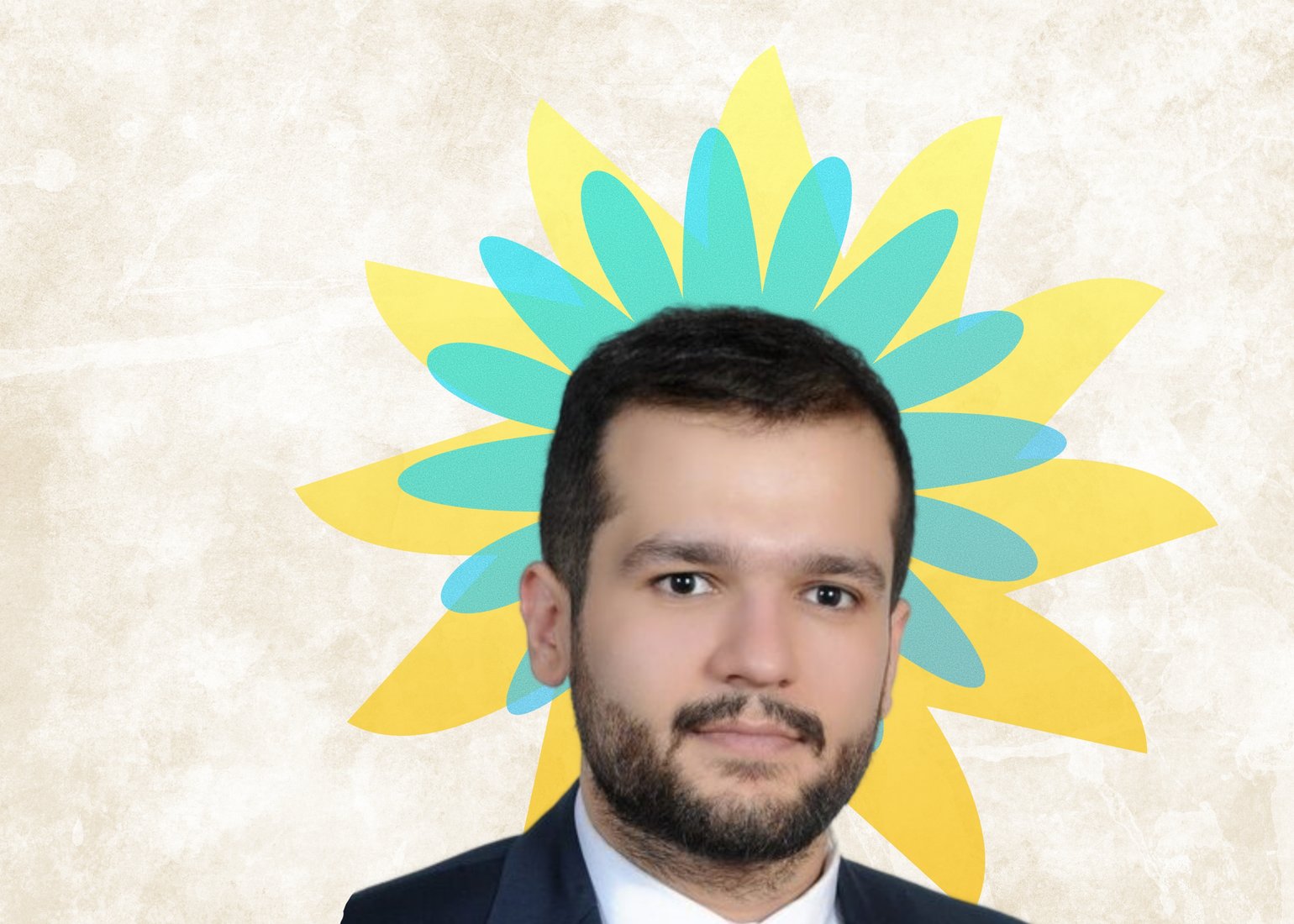
We’re delighted to announce that EdgeAI-Drone: Intent-Driven Edge-AI Drone Inspection for Bridge Infrastructure has been selected for funding by the Austrian Research Promotion Agency (FFG)!
Led by TU Wien, the consortium brings together TU Wien, the University of Klagenfurt, and Bernard Technologies GmbH, combining research in distributed systems, AI, and multimedia communication with industrial expertise in infrastructure inspection. The new FFG BRIDGE project is coordinated by Reza Farahani from TU Wien’s Distributed Systems Group (DSG) and will investigate how drones can understand an inspector’s request, examine relevant areas, and report findings while the inspection is underway.
“A crack on the underside of a bridge can be difficult to reach, yet engineers need to locate it, document it, and assess its condition,” explains Farahani. “Access equipment, traffic restrictions, and extensive manual analysis can make bridge inspections demanding.” Drones offer a valuable new perspective, he adds, but collecting images is only part of the task. “Turning them into timely, useful findings is equally important,” Farahani says, summarizing the challenge behind the new project.
An operator could begin with a simple instruction: “Inspect this bridge section for defects and report what you find”. The researchers will develop methods to translate such a request into a mission, guide the drone’s sensing towards relevant locations, and analyze visual evidence directly on board. Lightweight vision-language models will connect the operator’s instructions with camera images to help identify damage such as cracks, corrosion, and concrete spalling. Making this work in flight requires careful decisions about limited computing power, battery capacity, and connectivity. EdgeAI-Drone will therefore adapt how tasks are shared between the drone and the cloud, Farahani explains.
The project has secured €360,000 in FFG funding, with a total project budget of €449,832, and will run from January 2027 to December 2029. Its goal is to support engineers with relevant information, while reducing inspection effort, as well as making more efficient use of energy and communication resources. The FFG BRIDGE Initiative is aimed at researchers and companies from all scientific disciplines and sectors in Austria. It funds fundamental research projects with realistic potential for commercialization and supports cooperation between scientific institutes and companies.
About
Reza Farahani is a Postdoctoral Researcher (University Assistant) at the Distributed Systems Group (DSG), TU Wien. Prior to this, he worked as a Postdoctoral Researcher and Lecturer at the University of Klagenfurt, contributing to Austrian CDG, FFG, and Horizon EU research projects in distributed systems. His research lies at the intersection of distributed and networked systems, edge–cloud computing, and intelligent service orchestration, focusing on the efficient execution of data-intensive and AI-driven workloads across heterogeneous computing infrastructures.
His work investigates distributed orchestration across the edge–cloud continuum, with emphasis on performance, reliability, and energy efficiency. He develops architectures, scheduling models, and orchestration frameworks that enable applications such as video streaming/processing, graph processing, and LLM inference to execute efficiently on heterogeneous edge, fog, HPC, and cloud resources. This includes the design of serverless and agent-driven orchestration mechanisms, as well as methods for energy-aware and resource-adaptive workload placement in large-scale distributed environments.
Technically, his research integrates Edge AI, agentic AI systems, serverless computing, softwarized and virtualized network functions, and multi-objective scheduling and optimization techniques to support scalable and dependable distributed services. He also designs and operates federated experimental testbeds combining HPC clusters, cloud platforms, and edge devices to evaluate latency, resilience, and sustainability properties of distributed AI systems under realistic deployment conditions.
Curious about our other news? Subscribe to our news feed, calendar, or newsletter, or follow us on social media.