
#README: Austrian Computer Science Day 2026
On June 1, we hosted the annual Austrian Computer Science Day under the motto “Computer Science in Modern Times: A sign of the times.”

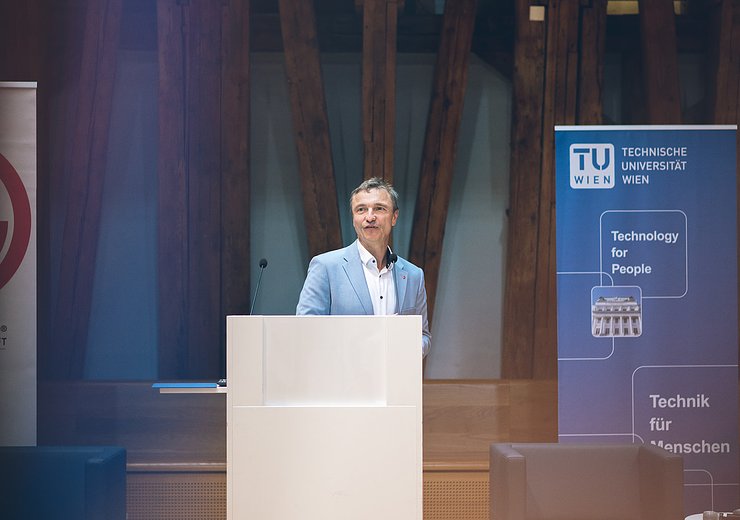
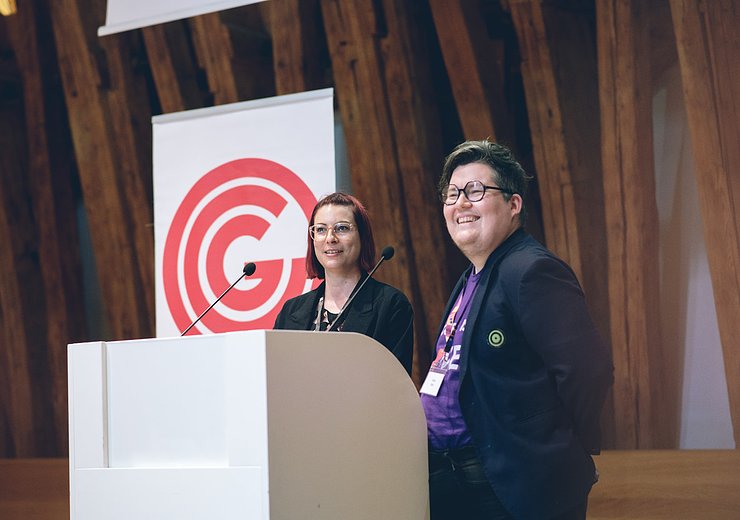
The event was opened by organizers Katta Spiel and Martina Lindorfer, who welcomed participants from across Austria’s computer science landscape. In their opening remarks, they emphasized their goal of creating an inclusive and welcoming environment in which everyone feels part of the community, regardless of career stage or institutional affiliation. They highlighted the importance of fostering connections, encouraging participants to exchange ideas, build new collaborations, and engage with colleagues.
The opening was followed by the presentation of the Heinz Zemanek Prize by Ronald Bieber, Secretary General of the Austrian Computer Society (OCG), and Jurychair Stefan Szeider, who introduced the award and outlined its selection process. Presented biennially and endowed with €5,000, the Heinz Zemanek Prize recognizes outstanding dissertations in computer science. This year’s award was presented to Tijn de Vos for his dissertation Graph Sparsification in Distributed and Dynamic Settings.
The first session of the Austrian Computer Science Day, Networks in Modern Society, featured a keynote by Verena Fuchsberger that examined how maker spaces can become more inclusive and accessible. Drawing on research into barriers to participation, she highlighted how social dynamics, community norms, and perceptions of expertise often discourage engagement, particularly among women and underrepresented groups. She presented practical approaches to fostering more welcoming environments, including redesigning maker-space cultures, broadening participation through targeted initiatives, and shifting the focus from the identity of the “maker” to the activity of making itself. The subsequent panel discussion reflected on making as a tool for learning, creativity, and inclusion. It also considered the relationship between making and emerging technologies such as generative AI, emphasizing the enduring value of hands-on, embodied, and material engagement. Throughout the conversation, the panel underscored the importance of creating spaces that accommodate diverse ways of learning, experimenting, and contributing, while acknowledging the social and structural barriers that continue to shape participation in maker communities.
In the second session of the day, Better Algorithms for a Resilient Democracy, Jana Lasser examined how algorithmically curated social media platforms shape public discourse and democratic processes. She argued that engagement-driven recommendation systems often amplify polarization, misinformation, and the concentration of influence, and proposed designing algorithms that instead promote values such as diversity, trustworthiness, and constructive civic discourse. The panel discussion expanded on these themes by highlighting how marginalized communities, including deaf users, can be disadvantaged by platform designs that fail to represent diverse forms of communication adequately. The speakers also explored the potential of AI and alternative social media infrastructures to support more inclusive and participatory online spaces.
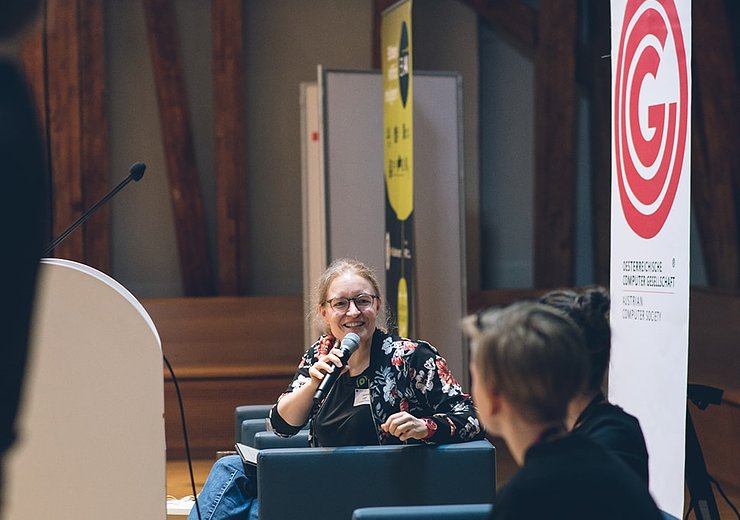
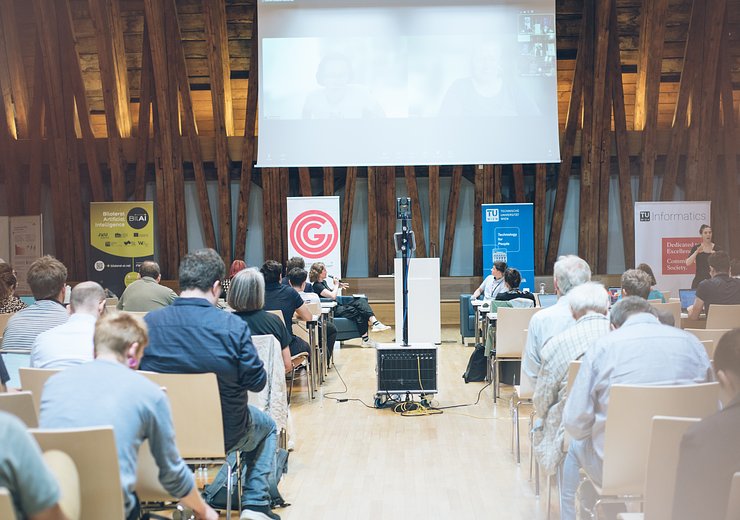
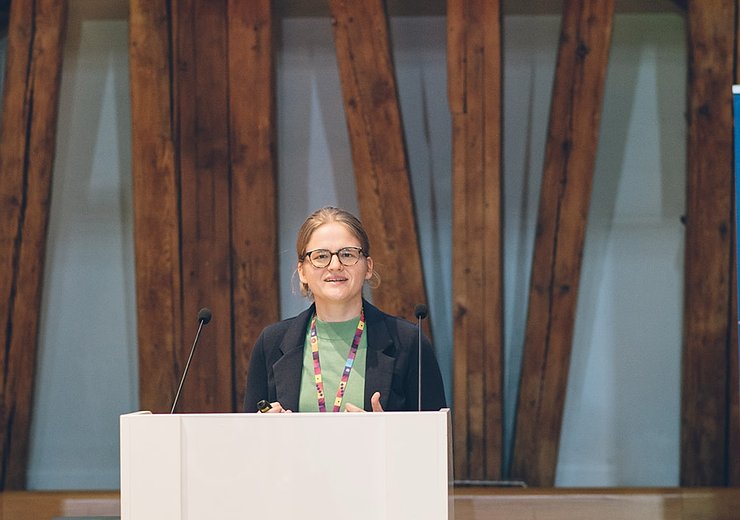
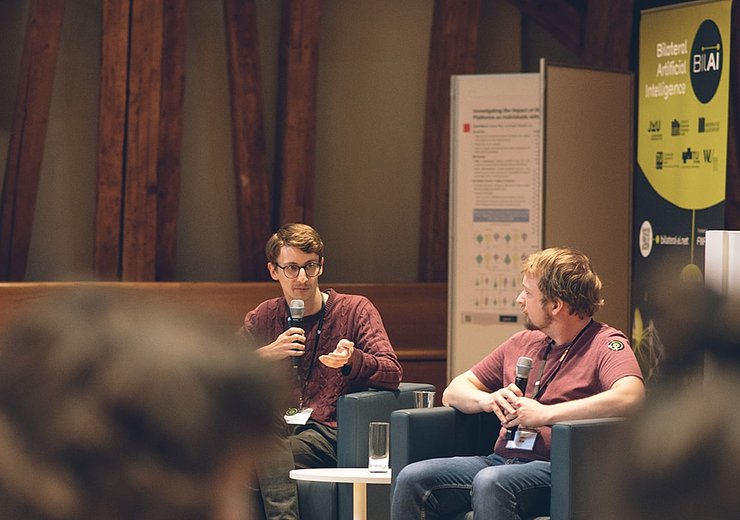

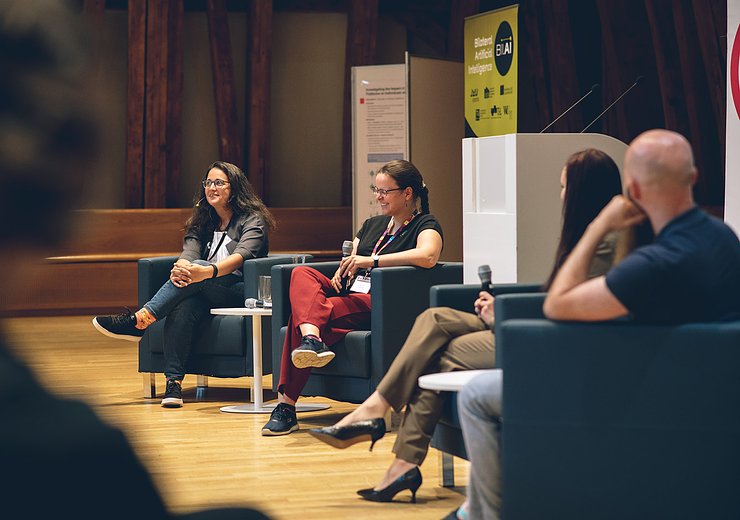

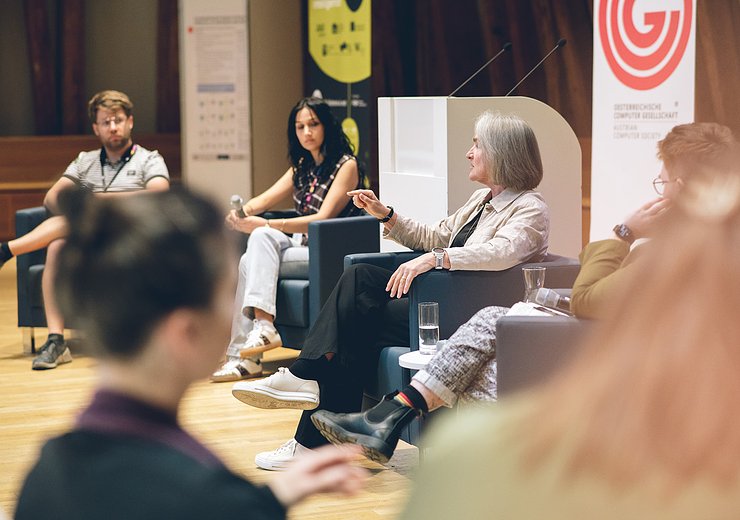

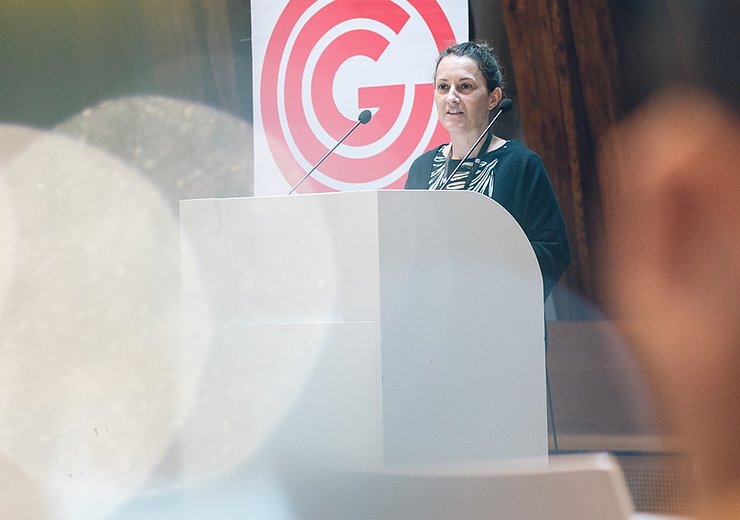
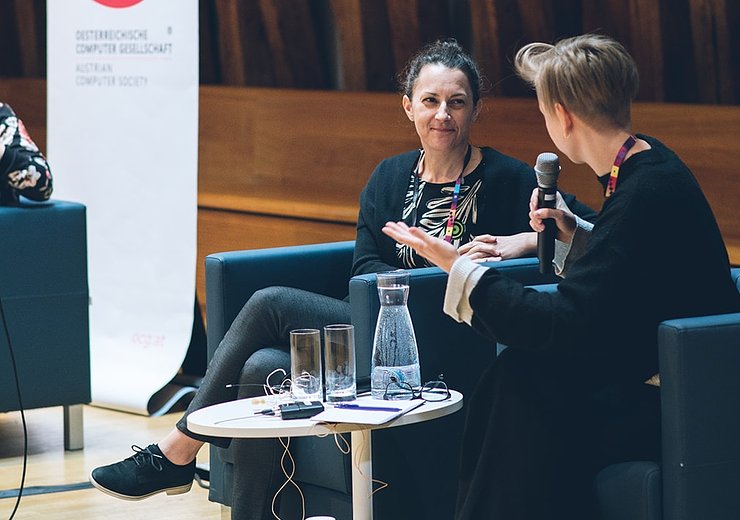
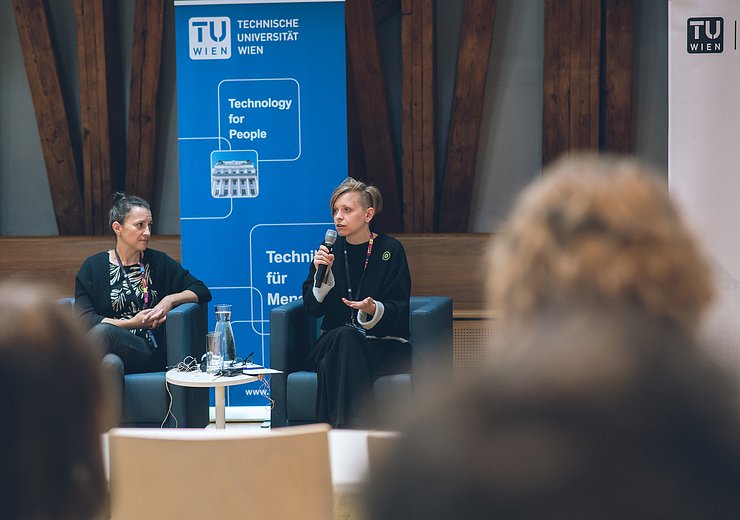
During the third keynote, Mena Leemhuis explored how combining neural and symbolic approaches can address key limitations of contemporary AI, particularly in light of the rapid rise of large language models (LLMs) and growing concerns about their interpretability, trustworthiness, and resource demands. She presented neurosymbolic AI as a hybrid paradigm that integrates the learning strengths of neural networks with the transparency, reasoning, and formal guarantees of symbolic systems, thereby enabling more explainable and reliable AI. The panel discussion focused on the practical challenges of achieving this balance, including trade-offs between performance, robustness, and explainability, as well as the difficulty of defining and evaluating trustworthiness in real-world settings. Panelists emphasized that trustworthy AI depends not only on technical advances but also on context-sensitive design and meaningful human interpretation.
The next session, Security in Modern Society featured Johanna Ullrich, who examined how critical infrastructures such as the Internet and the power grid are undergoing major transitions, including the shift to IPv6 and the integration of decentralized renewable energy. She showed how these changes increase both efficiency and complexity, while also introducing new security and resilience challenges that can be studied through empirical internet measurements and open-data modeling of power systems. A key insight was that increasing decentralization and digitalization can reduce system transparency and amplify vulnerabilities, especially in the presence of technological monocultures and widespread IoT deployment. The discussion further highlighted strong interdependencies between infrastructures, such as the reliance of digital systems on stable electricity and the growing influence of networked control on the power grid.
In the last session of the ACSD 2026, Responsibility in Modern Society, Geraldine Fitzpatrick argued that responsibility in research and technology development cannot be adequately captured by existing ethics codes, guidelines, or policy frameworks alone. Instead, she emphasized the challenge of translating widely accepted principles—such as societal benefit or harm avoidance—into concrete research practice, where they often remain abstract and underspecified. She stressed that meaningful responsibility requires moving beyond “tick-box” compliance toward actively questioning what problems are being solved and what positive outcomes are being aimed for. A key point was the need for interdisciplinary collaboration, as socio-technical problems cannot be addressed within disciplinary silos. She also underscored the structural and practical constraints of academic systems—such as time pressure, publication incentives, and evaluation metrics—that often discourage reflective and responsible work. She concluded by urging researchers to take responsibility in small, everyday actions: questioning assumptions, engaging constructively in peer review and hiring processes, building collaborative skills, and actively shaping research cultures that enable more responsible practice. She also emphasized that responsibility is not a one-time design requirement but an ongoing practice that must be embedded throughout research lifecycles.
The event concluded with closing remarks from the organizers, followed by an informal networking session among participants and speakers. We would like to sincerely thank all sponsors and supporters whose contributions made the ACSD possible; without their support, the event would not have been realized.

Curious about our other news? Subscribe to our news feed, calendar, or newsletter, or follow us on social media.