
Austrian Computer Science Day 2026: “CS in Modern Society: A Sign of the Times”
Join us on June 1, 2026, at TU Wien’s Kuppelsaal for the annual Austrian Computer Science Day!

- –
-
TU Wien, Campus Karlsplatz
Kuppelsaal -
1040 Vienna, Karlsplatz 13
4. Stock, Raum AA0448 -
This event requires registration.
See description for details.
On This Page

We’re excited to invite you to the Austrian Computer Science Day 2026! This year’s motto is “CS in Modern Society: A Sign of the Times”. The ACSD 2026 takes place on Monday, June 1, in the famous Kuppelsaal of TU Wien.
The Austrian Computer Science Day (ACSD) is an annual event that brings together computer scientists from all over Austria. Join us and take the opportunity to network, exchange research ideas, and meet both junior and senior researchers. The ACSD 2026 is organized by Martina Lindorfer and Katta Spiel.
We look forward to seeing you there!
Registration
Pleaser Register!
Attendance is free, but registration is required!
We provide sign language interpretation (“ÖGS-Dolmetsch”) for this event.
Schedule
Program
| Time | |
|---|---|
| 9:00–10:00 Uhr | Welcome Address and Preisverleihung Heinz Zemanek Preis 2026 |
| 10:00–11:00 Uhr | Making in Modern Society with the talk Participation in Digital Fabrication: Inequalities, Barriers, and Paths Forward by Verena Fuchsberger (The University of Salzburg). With respondents Monja Hirscher (University of Arts Linz) and Sara Mlakar (University of Applied Sciences Upper Austria), moderation by Barbara Göbl (University of Vienna) |
| 11:00–11:30 Uhr | Coffee Break |
| 11:30–12:30 Uhr | Networks in Modern Society with the talk Better Algorithms for a Resilient Democracy by Jana Lasser (University of Graz). With respondents Vedad Misirlic (Graz University of Technology) and Vanessa Schügerl (Heriot-Watt University), moderation by Kay Kender (TU Wien) |
| 12:30–13:30 Uhr | Lunch Break |
| 13:30–14:30 Uhr | Logic in Modern Times with the talk Neurosymbolic AI: Towards Interpretable and Trustworthy Artificial Intelligence by Mena Leemhuis (Johannes Kepler University Linz). With respondents Kevin Innerebner (Graz University of Technology) and Kevin Sidak (University of Vienna), moderation by Emery Neufeld (TU Wien) |
| 14:30–15:00 Uhr | Poster Exhibition |
| 15:00–16:00 Uhr | Security in Modern Society with the talk Critical Infrastructures in Transition - Lessons from the Internet and the Power Grid by Johanna Ullrich (Interdisciplinary Transformation University Austria). With respondents Nicola Leschke (Paris Lodron University of Salzburg) and Jennifer-Marieclaire Sturlese (Vienna University of Economics and Business), moderated by Simon Koch (University of Innsbruck) |
| 16:00–16:30 Uhr | Coffee Break |
| 16:30–17:30 Uhr | Responsibility in Modern Society with the talk From Policy to Practice by Geraldine Fitzpatrick (independent, formerly TU Wien). With respondents Martin Beneš (University of Innsbruck) and Cansu Demir (Paris Lodron University of Salzburg), moderated by Emma McDonnell (ÖAW/TU Wien) |
| 17:30–18:00 Uhr | Closing words |





Speakers
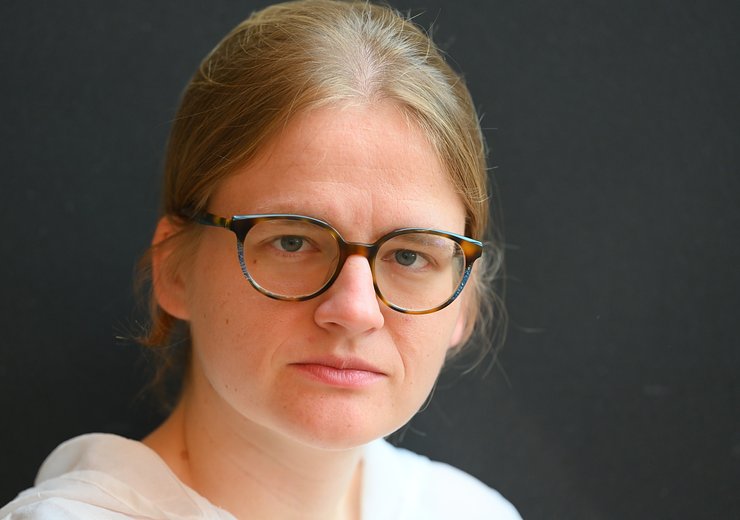
Geraldine Fitzpatrick
Responsibility in Modern Society: from Policy to Practice
What interesting times we are living in. As computer scientists, we are at the centre of addressing some of modern society’s biggest challenges. Technological advances are fundamentally changing all aspects of our society. CS work is now much more than just code and algorithms and proofs (if it ever was), as recognised by the growing importance of initiatives such as responsible research and innovation, human-centred AI, ethics in AI, digital humanism and so on. But to what extent are we outsourcing our own responsibility to these initiatives? Responsibility matters at all levels, from policies, guidelines and conceptual discussions, right down to the practical matters of what we do, who we work with, and how we work together. This short provocation will open up discussion about what these matters of practice might entail and how we can equip ourselves to do better. Responsibility in modern society depends on us.
Geraldine Fitzpatrick was a Professor of Technology Design and Assessment and led the Human-Computer-Interaction Group at TU Wien Informatics until October 2023. She is an award-winning researcher, teacher, and leader with international experience in academia, industry and healthcare. Drawing on her PhD in Electrical Engineering and Computer Science from the University of Queensland and her hands-on experience as a UX practitioner and nurse/midwife, her research focuses on socio-technical and people-centred perspectives of computing. Recognitions for Gerladine Fitzpatricks’ work include ACM Distinguished Scientist, IFIP Fellow, SIGCHI Lifetime Service Award, IFIP TC-13 Pioneer Award, TU Wien Best Teacher Award, and ACM Distinguished Speaker. She also holds an MSc in Applied Positive/Coaching Psychology (UEL), and her current work is focussed on developing future leaders and crafting more collegial sustainable research cultures. She also hosts the Changing Academic Life podcast series.
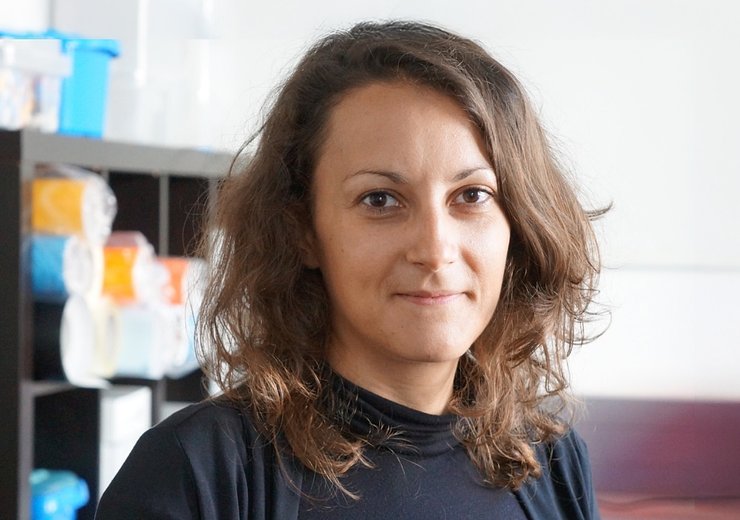
Verena Fuchsberger
Participation in Digital Fabrication: Inequalities, Barriers, and Paths Forward
Making, that is, the hobbyist creation of physical things by means of digital fabrication tools, comes with different narratives of democratization - facilitating the acquisition of technological skills, contributions to innovation, and participation in society. However, those benefits are often limited to particular socio-demographics, as making communities and spaces are rarely characterized by diversity. In this talk, I will provide a brief overview of different barriers to making, and suggest different ways forward.
Verena Fuchsberger is an Associate Professor at the HCI division at the University of Salzburg. She has been focusing on the intersections of the physical and the digital world across different cases, such as the relationship between grandparents and grandchildren or the socio-materiality of makerspaces. Inspired by New Materialist theories, she is particularly interested in diversity and sustainability in and through digital technologies.
Jana Lasser
Better Algorithms for a Resilient Democracy
Social media has become a central venue for social discourse. However, its recommendation algorithms ensure that highly emotional and polarizing content receives disproportionate attention — with potentially serious consequences for society, such as the increased spread of extreme viewpoints and the extreme concentration of influence. In my talk, I will discuss how recommendation algorithms for social media can be designed to promote civil discourse rather than undermine it—an endeavor guided by the recently enacted Digital Services Act.
Jana Lasser is a Professor for Data Analysis at University of Graz where she leads the research group of Complex Social & Computational Systems at the interdisciplinary center IDea_Lab. She researches emergent phenomena in complex social systems, employing methods from machine learning, data science, natural language processing and computational and statistical modelling to understand how humans behave in socio-technical environments. Her current research interests include the the spread of misinformation and conspiracy theories on social media platforms, the application of LLMs to extract structured knowledge from text data, and the impact of social media recommendation algorithms on societal outcomes.
Mena Leemhuis
Neurosymbolic AI: Towards Interpretable and Trustworthy Artificial Intelligence
The current AI landscape is rapidly changing, particularly due to new approaches such as Large Language Models. These are gaining influence not only in research, but also in society. At the same time, the widespread adoption of such models has increased awareness of the limitations of current AI systems: not only the performance of a system but also its interpretability and trustworthiness needs to be taken into account. Additionally, the immense energy and data needs of many AI approaches are increasingly recognized as problematic. Therefore, established symbolic approaches are gaining importance again as trustworthy, interpretable and less data-hungry solution strategies. In this context, neurosymbolic AI has emerged as a promising approach, combining the abilities of subsymbolic and symbolic approaches and getting the best out of both worlds. This paves the way for a new generation of AI systems that combine neural performance with symbolic guarantees.
Mena Leemhuis is a postdoctoral tenure track researcher at the Institute for Symbolic AI at the Johannes Kepler University in Linz. She is a key researcher at the FWF-Cluster of Excellence Bilateral AI. Her research focuses on neurosymbolic AI, particularly on the injection of background knowledge information into learning approaches geometrically.
Johanna Ullrich
Critical Infrastructures in Transition - Lessons from the Internet and the Power Grid
Critical infrastructures such as the Internet and the power grid form the backbone of modern society, serving people’s needs for energy, transport, and information, and dependence has only grown in recent decades. Both infrastructures are undergoing transformative changes, reshaping their design, operation, and security. The Internet is transitioning from IPv4 to the successor protocol IPv6 to overcome address scarcity, while the power grid is adapting to the integration of decentralized renewable energy sources and the increasing demand for electrification. While necessary to meet future demands, these transitions introduce new complexities and vulnerabilities that require a deeper understanding. Gaining insight into these infrastructure’s status quo is challenging, albeit for different reasons. This talk explores empirical methods for shedding light on these critical infrastructures and assesses their security and resilience based on the collected data. This talk aims to foster a broader understanding of the critical role of the discussed infrastructures. It will provide a comprehensive overview of the opportunities and risks associated with these transitions, emphasizing the need for proactive strategies to ensure their resilience and security.
Johanna Ullrich is a Professor of Security at the Interdisciplinary Transformation University (ITU) in Linz, Austria. Based on her interdisciplinary background, she works on security at the intersection of information technology and classical engineering. Her research has guided Internet standardization at the Internet Engineering Task Force, improved widely used operating systems to better protect users’ privacy, introduced a previously unknown attack against the power grid, and shaped the understanding of critical infrastructures in crises. Johanna earned her PhD with the highest distinction (promotio sub auspiciis praesidentis, awarded by the Austrian President) at the Vienna University of Technology (Technische Universität Wien). In collaboration with industry, she founded the independent research group on Network and Critical Infrastructure Security at SBA Research, a Competence Center for Excellent Technologies (COMET) on information security, and the Austrian Internet Measurement Hub, a platform for large-scale Internet measurements. Before joining IT:U, she was a Professor of Communication Technologies at the University of Vienna.
Poster Exhibition
- Martin Benes (University of Innsbruck) // “Automating color image steganography research from first principles”
- Cansu Demir (University of Salzburg) // “Making Sense of Uncertainty in Robotaxis”
- Max Glaida (FH Technikum Wien) // “Agentic Engineering: A modern approach to”
- Pulkit Goyal (University of Innsbruck) // “Can AI mimic the semantics of human play?”
- Kevin Innerebner (Graz University of Technology) // “Neuro-Symbolic Architectures for Transparent and Interpretable Recommender Systems”
- Muhammad Nasar Jamal (University of Klagenfurt) // “How your Wi-Fi detects intruders”
- Andreas Kriegler (TU Wien) // “Towards Symmetry-sensitive Pose Estimation: A Rotation Representation for Symmetric Object Classes”
- Nina Lobnig (University of Klagenfurt) // “Once Upon a Query…Stories and SQL in Database Education”
- Sebastian Lüderssen (TU Wien) // “Near-Optimal Four-Cycle Counting in Graph Streams”
- Gregor Mayr (Graz University of Technology) // “Accessibility and User Diversity in Recommender Systems”
- Vedad Misirlic (Graz University of Technology) // “Investigating the Impact of Short-form Video Platforms on Individuals with ADHD”
- Pia Neuwirth (University of Salzburg) // “From Alignment to Evaluation – Automating LLM Experimentation”
- Ylli Sadikaj (University of Vienna) // “Joint Embedding of Attributed Multiplex Networks: From Spectral to Contrastive Approaches”
- Andrii Shkabrii (University of Vienna) // “Teaching Neural Networks What to Ignore”
- Kevin Sidak (University of Vienna) // “Finding Hidden Hierarchies - Unsupervised Tree Learning in Hyperbolic Space”
- Adam Szabo (TU Wien) // “Data Fidget: evaluating and iterating a movement-based data physicalisation with blind and low vision users”
- Armin Walch (University of Innsbruck) // “ATLAS: Inferring Sublinear Amortised Bounds with Types” (with interactive component)
Photography and Offlinetags
Photos will be taken at the event. Since not everyone wants to be photographed, Offlinetags will be used during the event. Offlinetags are a social and machine-readable signal for communicating photo preferences. They do not replace the university’s privacy notice or photo guidelines, but serve as an additional way to express your wishes regarding being photographed.
We ask all participants to respect each other’s preferences.
More information about Offlinetags is available at offlinetags.github.io.
Curious about our other news? Subscribe to our news feed, calendar, or newsletter, or follow us on social media.