
#README: CAIML Symposium 2026
On May 11, we held the 5th CAIML Symposium to discuss current developments in AI and machine learning, with a particular focus on AI for industry.

Picture: Amélie Chapalain / TU Wien Informatics
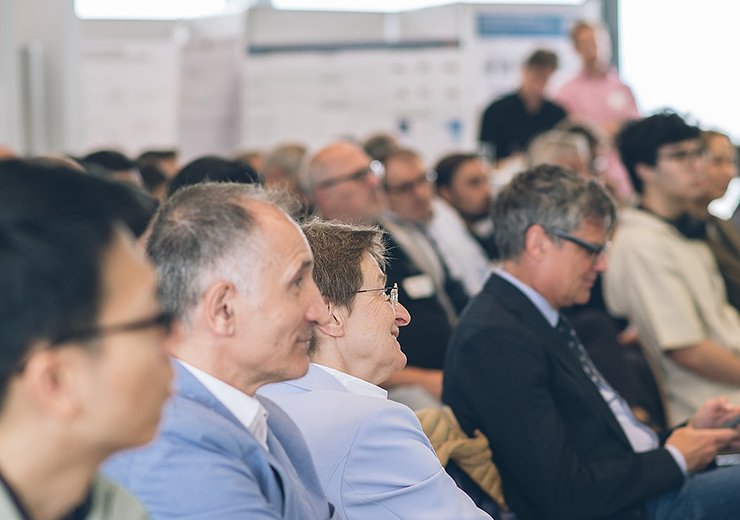
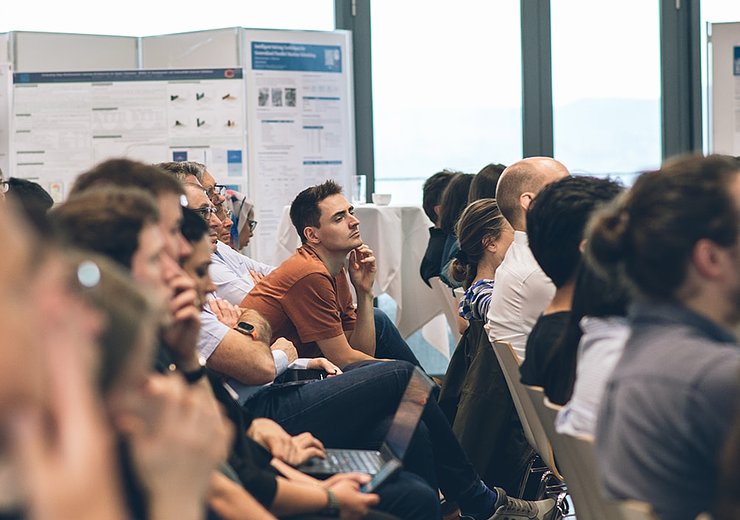
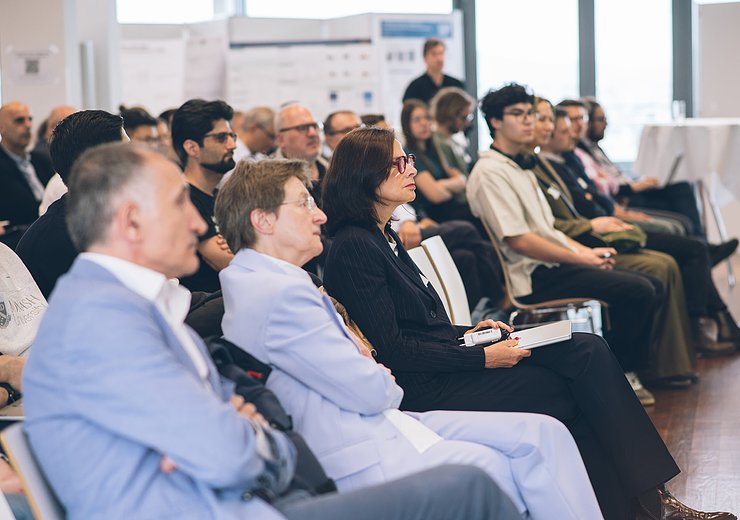
On May 11, we held the 5th Symposium of the Center for Artificial Intelligence and Machine Learning (CAIML) at TU Wien. The Symposium brought together researchers, industry representatives, and academic leaders to discuss current developments in artificial intelligence and machine learning, with a particular focus on AI for industry.
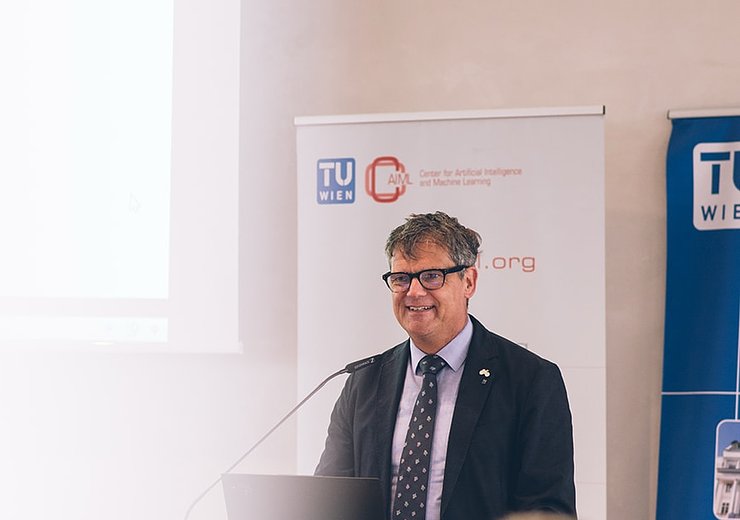
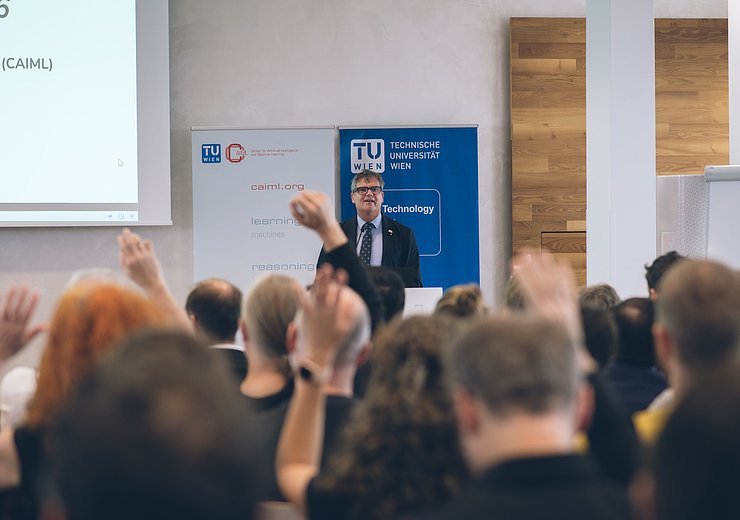
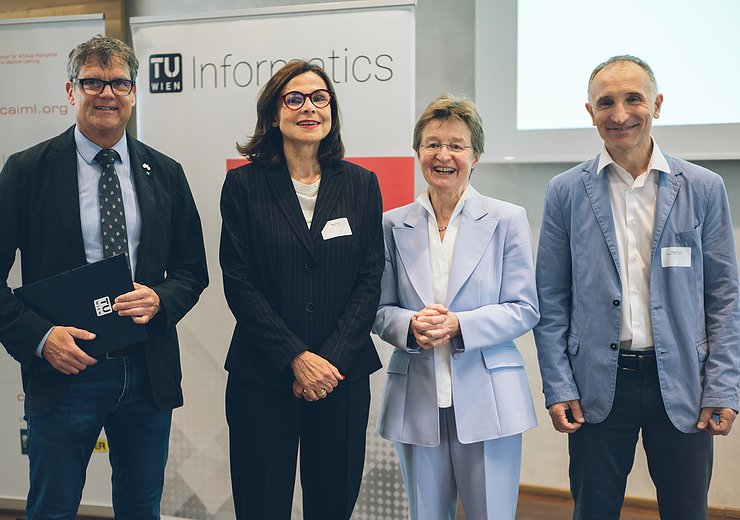
The symposium was opened by TU Wien Rector Jens Schneider and Informatics Dean Gerti Kappel, while CAIML Director Nysret Musliu guided the program as moderator. In his opening remarks, he highlighted CAIML’s continued growth through initiatives such as the doctoral college iCAIML and the recent AI Festival, emphasizing the center’s commitment to strengthening collaboration between academia and industry through dialogue and shared innovation.
In his welcome address, TU Wien Rector Jens Schneider reflected on both the opportunities and limitations of AI, stressing that trust, responsibility, and domain expertise remain fundamentally human responsibilities. He connected these considerations to TU Wien’s broader strategy of embedding AI and digital transformation across research, teaching, and administration, while underscoring the importance of data quality, interdisciplinarity, and contextual understanding beyond algorithmic output. Informatics Dean Gerti Kappel highlighted the rapid pace of AI research and the role of CAIML and the Cluster of Excellence Bilateral AI in advancing responsible and sustainable AI development. She pointed to ongoing work in areas such as symbolic reasoning, energy-efficient AI systems, and AI-assisted software development.
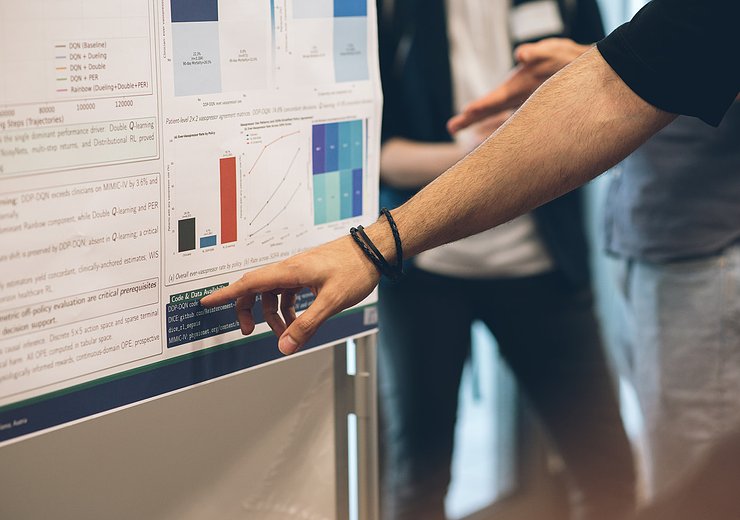
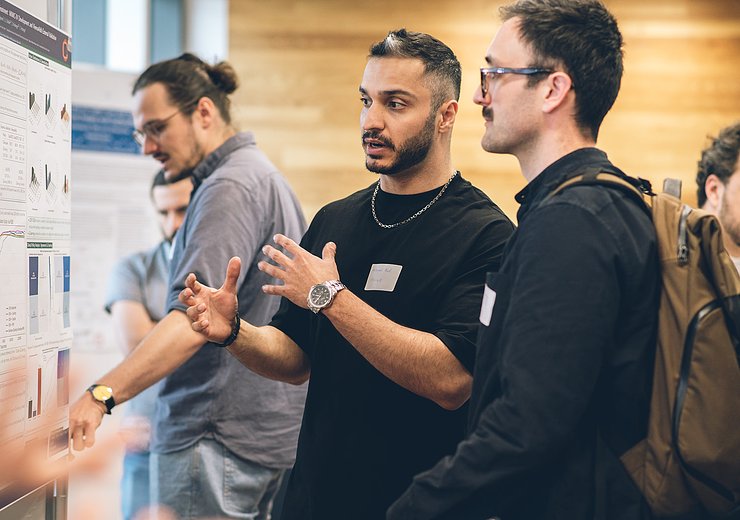
A central component of this year’s symposium were the interactive breakout sessions to foster direct exchange between researchers and industry partners, organized in collaboration with TU Wien’s department for Industry Engagement and Partnerships. The morning sessions focused on practical challenges in AI-assisted coding and agentic AI, featuring short impulse pitches that served as starting points for discussion. In the afternoon, the focus shifted to AI for optimization and prediction, presenting research perspectives and application scenarios. Across both sessions, participants joined moderated thematic groups to discuss concrete challenges drawn from both research and industry practice, share experiences, explore AI-based solutions, and identify opportunities for future collaboration.
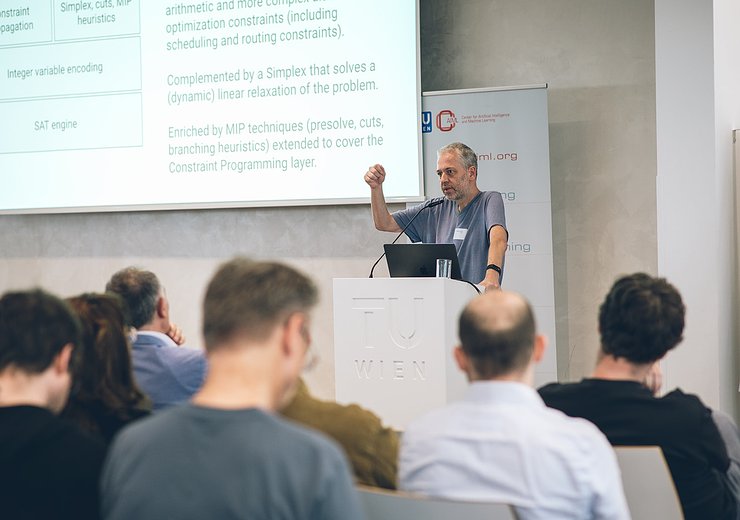
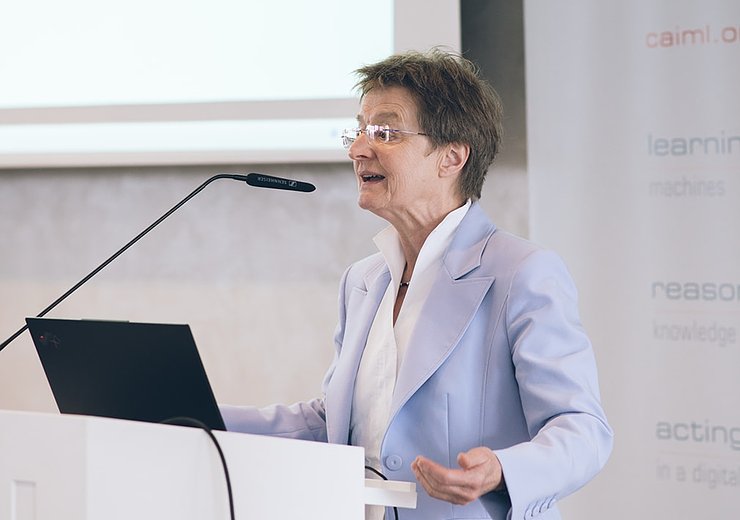
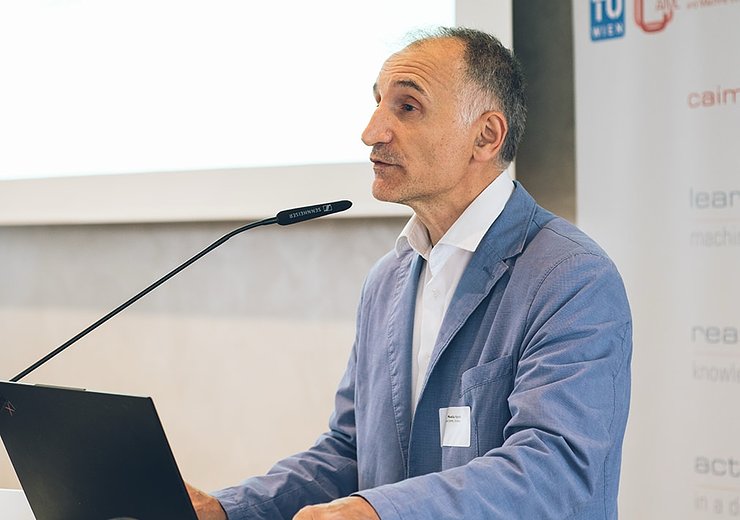
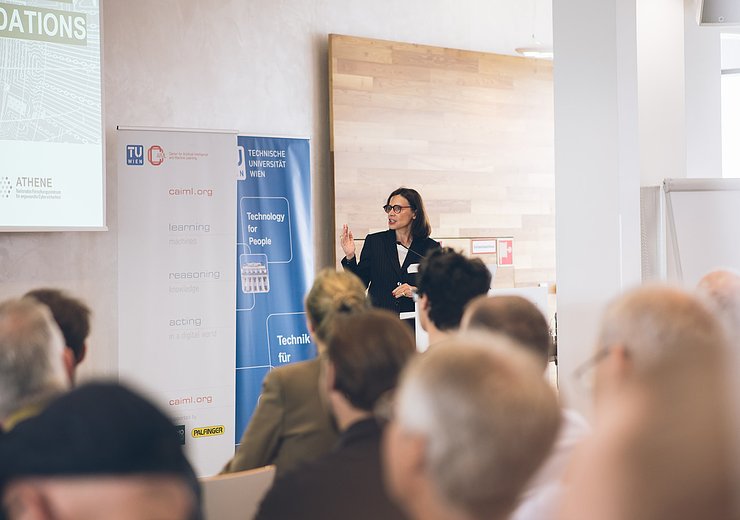
In the first keynote of the symposium, Mira Mezini reflected on more than two decades of AI-assisted programming research, tracing the field’s development from early machine learning approaches for software engineering to today’s large language models. Using her own research trajectory as a lens, she highlighted how software engineering researchers contributed to some of the earliest intelligent coding tools long before the recent surge of interest in generative AI. While acknowledging the transformative impact of foundation models on programming practice, she emphasized that current systems still face significant challenges in terms of reliability, robustness, and their suitability for software engineering tasks. Throughout the keynote, Mezini argued that advancing AI-assisted programming will require closer integration between machine learning and software engineering expertise, with future foundation models designed specifically to address the requirements of software development. By connecting past achievements with ongoing research, she offered a perspective on how the next generation of AI tools can better support programmers while maintaining the quality and trustworthiness of software systems.
The second keynote was delivered by Laurent Perron, Software Engineer at Google, and one of the key developers of OR-Tools and CP-SAT. His lecture provided insights into the development of CP-SAT, a state-of-the-art optimization solver that combines techniques from constraint programming, satisfiability solving, and mathematical optimization. Perron described how the solver builds on advances in lazy clause generation while incorporating methods traditionally associated with mixed-integer programming and large-scale optimization. A central theme of the talk was the importance of combining diverse solution strategies within a unified framework, allowing the solver to tackle complex real-world optimization problems with high efficiency and robustness. He also highlighted how the integration of different optimization paradigms has led to significant advances in areas such as scheduling and resource allocation, demonstrating the continued importance of optimization research for both industry and scientific applications. Throughout the lecture, Perron illustrated how combining complementary methods and leveraging parallel search strategies has enabled CP-SAT to achieve state-of-the-art performance across a wide range of challenging optimization problems.
The symposium concluded with a lively discussion among speakers and participants, highlighting the growing importance of interdisciplinary collaboration between artificial intelligence, software engineering, and optimization research. Throughout the day, the event demonstrated CAIML’s role as a platform for connecting academia and industry while fostering dialogue on the opportunities, challenges, and future directions of AI-driven innovation.
Missed the event?
Don’t worry, we’ve got you covered :) You can watch the keynotes and impulse pitches on the CAIML website.
Curious about our other news? Subscribe to our news feed, calendar, or newsletter, or follow us on social media.