
Best Student Paper Award at PRIMA!
We’re excited to announce that the paper “From Explicit Allowances to Defeasible Deontic Operators” received a Best Student Paper Award at PRIMA 2025!
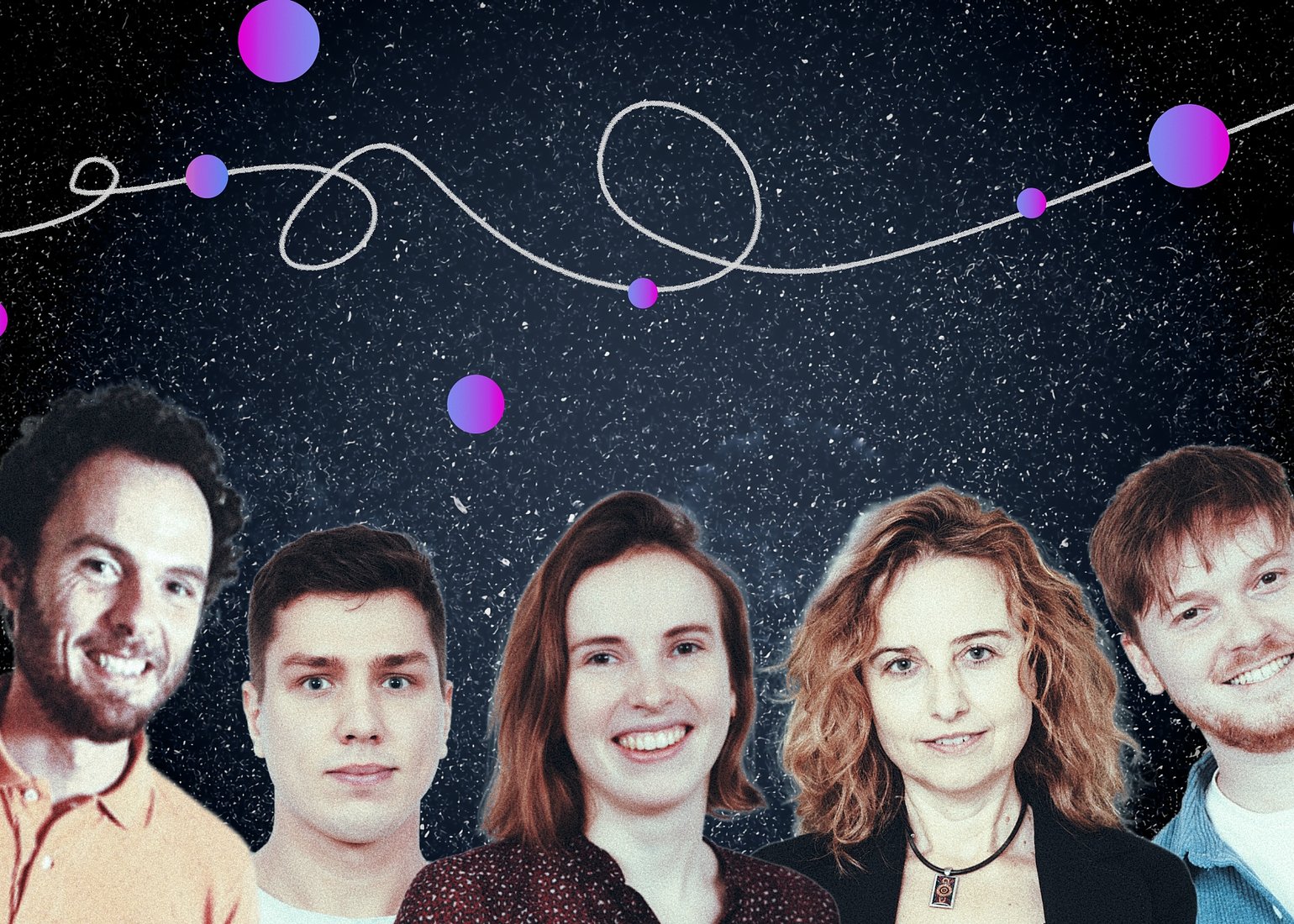
Picture: Sylvie Doutre, Nadja Meister, Luiza Puiu, and Josephine Dik
We’re excited to announce that Agata Ciabattoni, Josephine Dik, Emiliano Lorini, Dominik Pichler, and Dmitrii Rozplokhas have won the Martin Purvis Best Student Paper Award at PRIMA 2025 for their paper “From Explicit Allowances to Defeasible Deontic Operators: A Modal View”!
The paper addresses formal reasoning about permissions, obligations, and prohibitions in systems where agents operate under norms—a need that arises in automated and socio-technical settings where safety, compliance, and accountability require machines to interpret rules, resolve conflicts, and justify actions in a predictable way. It refines preference-based deontic logic by clearly separating permissions that are explicitly specified from those that can be inferred, and by anchoring the preference ordering over possible worlds in a base of explicit permissions. A case study with robotic agents illustrates the approach in practice and provides formal complexity results along with an automated decision procedure based on quantified Boolean formulas.
PRIMA 2025, the International Conference on Principles of Practice in Multi-Agent Systems, was held at the end of December 2025 in Modena, Italy. It centers on a multi-agent perspective as the foundation for conceptualizing, engineering, and governing decentralized systems, highlighting core abstractions such as intelligent agents, protocols, norms, organizations, trust, and incentives.
Congratulations to Agata, Josephine, Emiliano, Dominik, and Dmitry on this outstanding achievement — especially to Agata, for receiving her fourth Best Paper Award within a year!
Abstract
Preference-based deontic logics provide a foundation for normative reasoning but fail to distinguish between explicit allowances – specified by a designer – and implicit ones derived by inference. This distinction is crucial in systems where agents may act only if (explicitly or implicitly) permitted. In this paper, we formalize this inference by grounding the preference ordering over possible worlds in a permission base, i.e., a set of explicit allowances, and derive implicit permissions, as well as defeasible prohibitions and obligations. Our framework provides solutions to key deontic paradoxes and is a conservative extension of Åqvist’s dyadic deontic system F extended with cautious monotony. We illustrate the approach with a case study involving robotic agents operating under normative constraints and provide complexity results together with a QBF-based decision procedure to support automated reasoning.
About the authors
Agata Ciabattoni is Professor and Head of the Research Unit Theory and Logic at TU Wien Informatics. She serves as a board member of the cluster of excellence Bilateral AI, and as co-chair of the Vienna Center for Logic and Algorithms (VCLA). She is the principal investigator of the WWTF-funded projects Training and Guiding AI Agents with Ethical Rules (TAIGER) and Acquiring and explaining norms for AI systems (AXAIS), as well as the project Logical methods for Deontic Explanations (LoDEx), funded by the Austrian Science Fund FWF. She is also a recipient of the FWF START Prize 2011, the highest Austrian award for early-career researchers.
Josephine Dik is a PhD student in the doctoral program LogiCS at TU Wien Informatics, which is co-funded by the Marie Skłodowska-Curie Actions of the European Commission. She works on deontic logic with an application to artificial intelligence, philosophy, and legal reasoning.
Emiliano Lorini is a senior researcher at the Centre National de la Recherche Scientifique (CNRS), co-head of the LILaC team (Logic, interaction, language and computation) at the Institut de Recherche en Informatique de Toulouse (IRIT). The general aim of his research is to develop formal models of interaction between cognitive agents. He has mainly worked in the area of artificial intelligence with strong interaction with other disciplines such as economics, philosophy, and cognitive sciences.
Dominik Pichler is a PhD student affiliated with the doctoral program LogiCS at TU Wien Informatics. His research is co-funded by the FWF project Logical Methods for Deontic Explanations (LoDEx). In his research, he investigates the semantics and proof theory of non-classical logics, with an application focus on artificial intelligence and philosophy. Together with Xavier Parent, he received the John-Jules Meyer Best Paper Award at DEON 2023.
Dmitrii Rozplokhas is a PhD student in the doctoral program Logics for Computer Science at TU Wien Informatics, which is co-funded by the Marie Skłodowska-Curie Actions of the European Commission. Together with Agata Ciabattoni, he was a recipient of the Ray Reiter Best Paper Prize at the 20th International Conference on Principles of Knowledge Representation and Reasoning (KR2023).
Curious about our other news? Subscribe to our news feed, calendar, or newsletter, or follow us on social media.