
Charting the Road to Quantum Computing
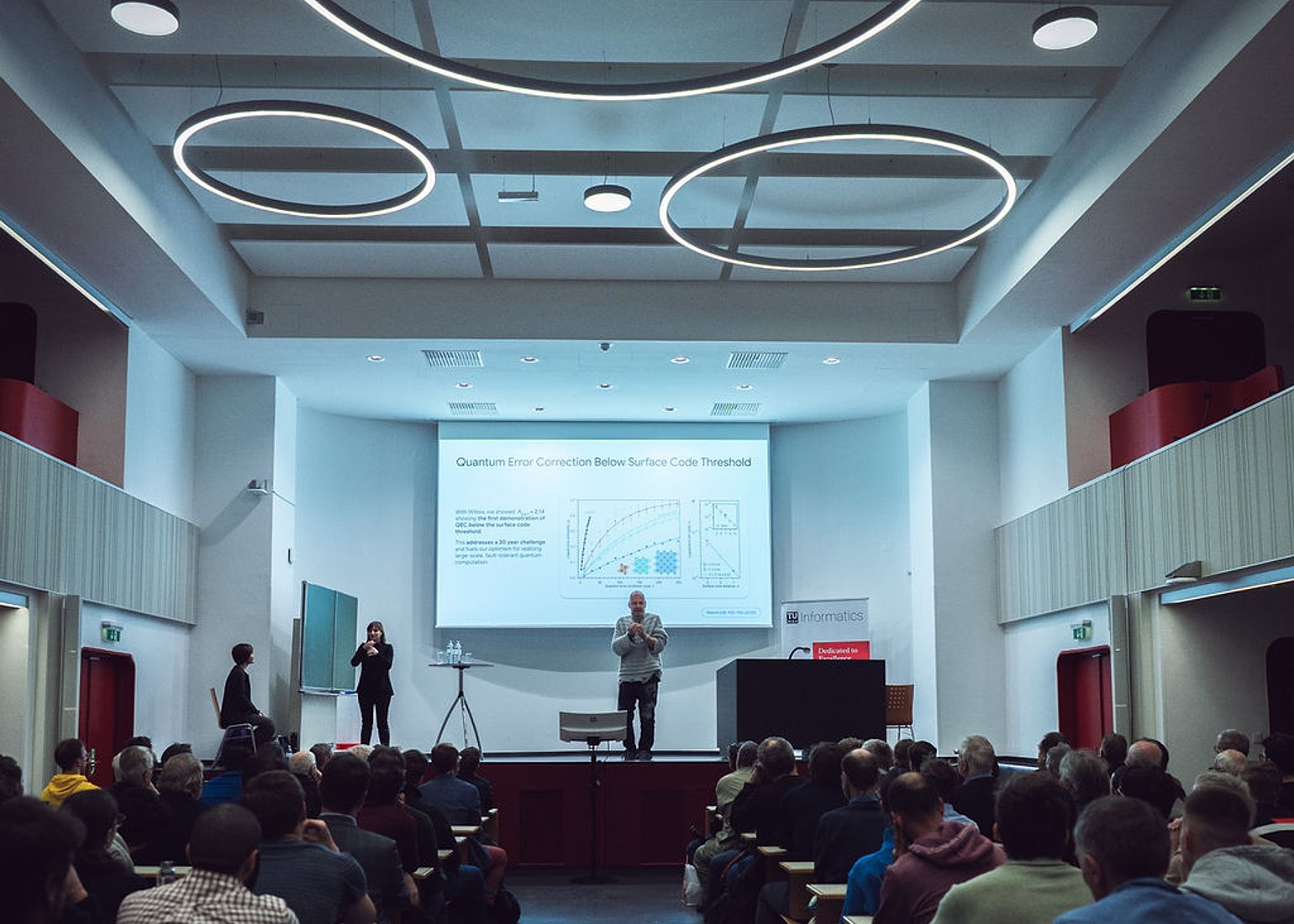
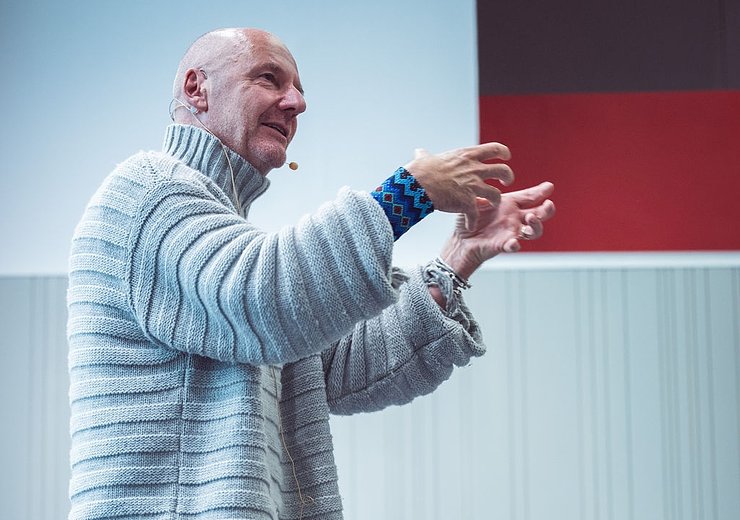
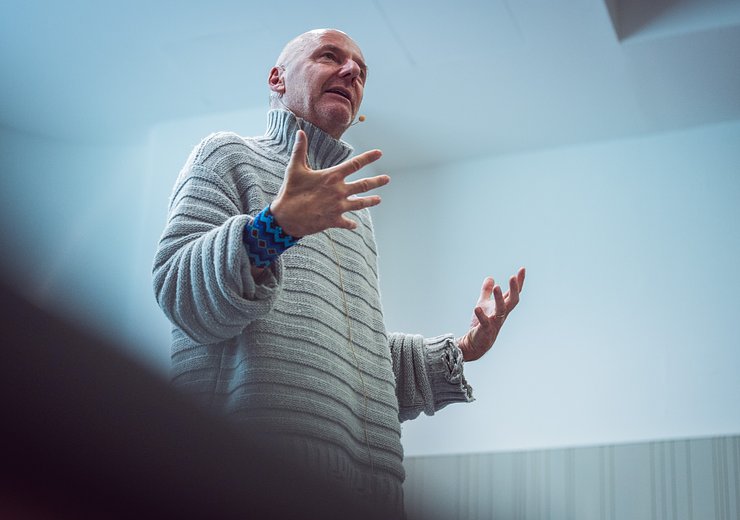
Hartmut Neven shared his insights on the latest in Quantum Computing and gave a glimpse of where the field is headed next.
Picture: Markus Hollo / TU Wien Informatics
Each year, the Vienna Gödel Lecture brings leading international researchers to the faculty to share ideas that shape the future of computer science and beyond. This year, the lecture marked a special moment as it also concluded the International Year of Quantum Science and Technology. It was our utmost pleasure to welcome Founder and Lead of Google Quantum AI Hartmut Neven, who offered a compelling outlook on where quantum computing is headed—and why the coming years may prove decisive.
Hartmut Neven’s lecture traced the long-term vision of building quantum computers capable of solving problems that are fundamentally out of reach for classical machines. He presented concrete milestones on this journey, explaining how decades of research are now turning into working systems. One of the central themes of his lecture was reliability; quantum systems are extremely sensitive to noise, which makes errors unavoidable. For many years, quantum error correction was seen as a theoretical promise rather than a practical solution. Neven presented recent results showing that errors can now be detected and corrected faster than they accumulate. This achievement, long considered one of the hardest challenges in the field, is a crucial step toward scalable quantum machines.
Beyond hardware, Neven highlighted a software breakthrough that signals a new phase for quantum computing. Neven explained how recent advances, such as the Quantum Echoes algorithm, allow quantum computers to perform computations that classical machines cannot realistically replicate. He showed how these methods enable tasks like simulating molecular structures through quantum-enhanced techniques and running extraordinarily large numbers of quantum circuits, demonstrating that quantum computing is beginning to deliver results with scientific relevance. Looking ahead, Neven outlined what such machines could enable: quantum simulation promises new insights into chemistry and materials science, potentially transforming areas such as energy storage or drug discovery. At the same time, he emphasized the broader societal implications, including the need to rethink digital security once large-scale quantum computers become available. The lecture closed on a more speculative note, touching on interdisciplinary research at the boundary of physics, neuroscience, and philosophy. These reflections pointed to the breadth of questions that quantum science continues to open up, extending beyond disciplinary boundaries.
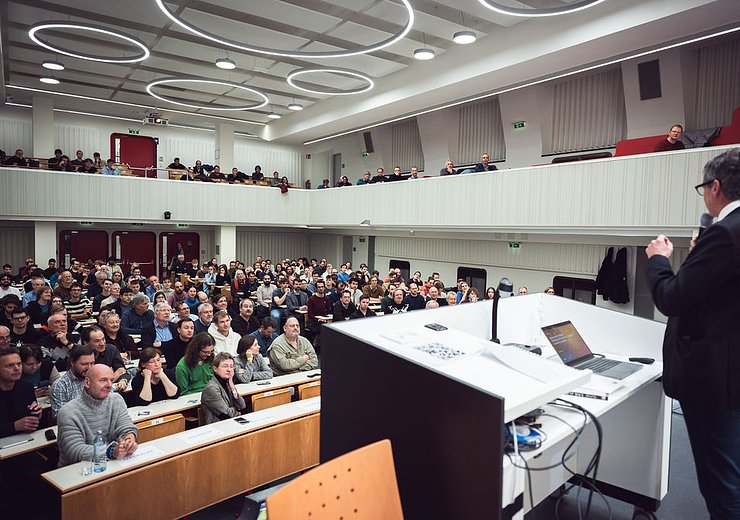
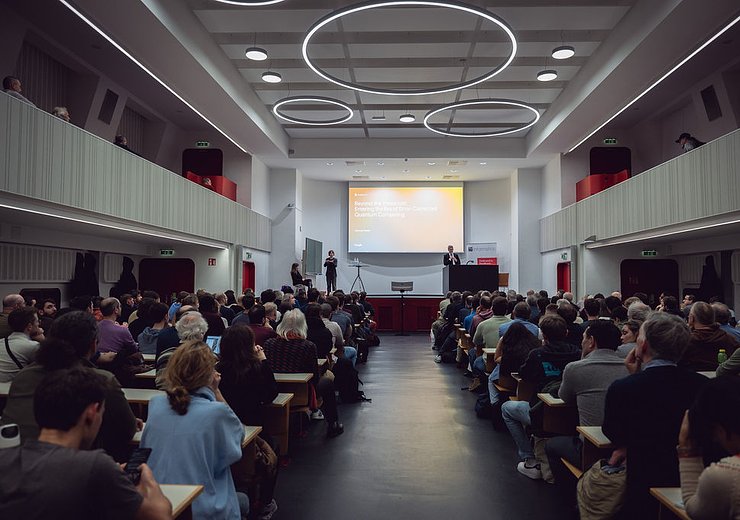
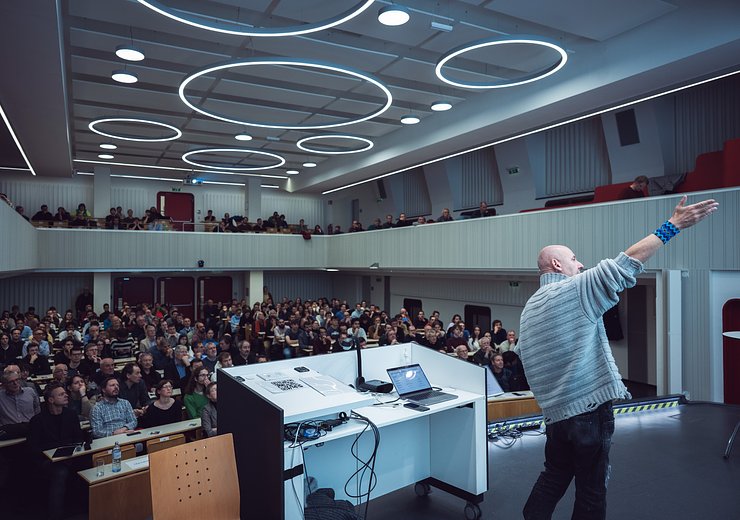
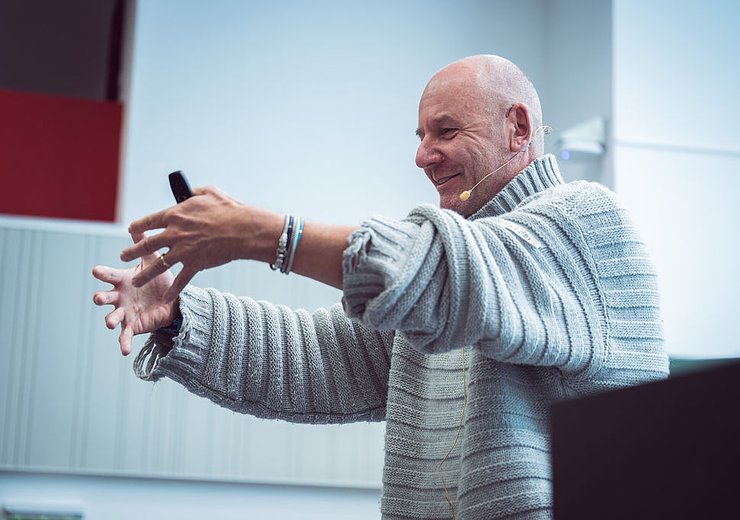
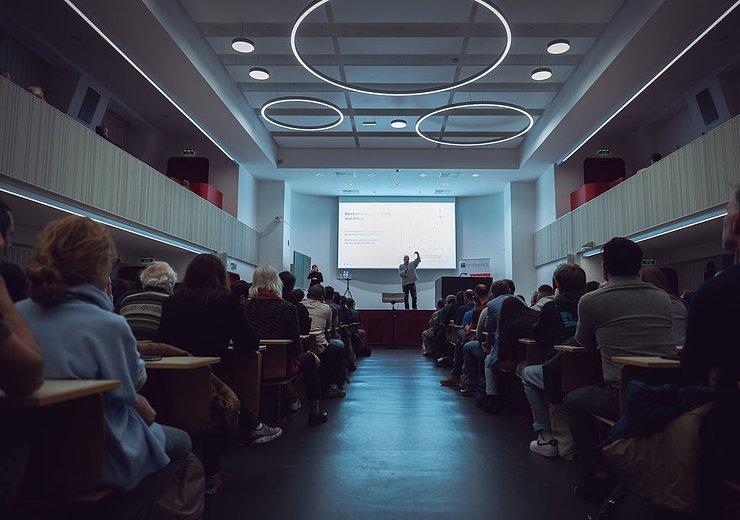
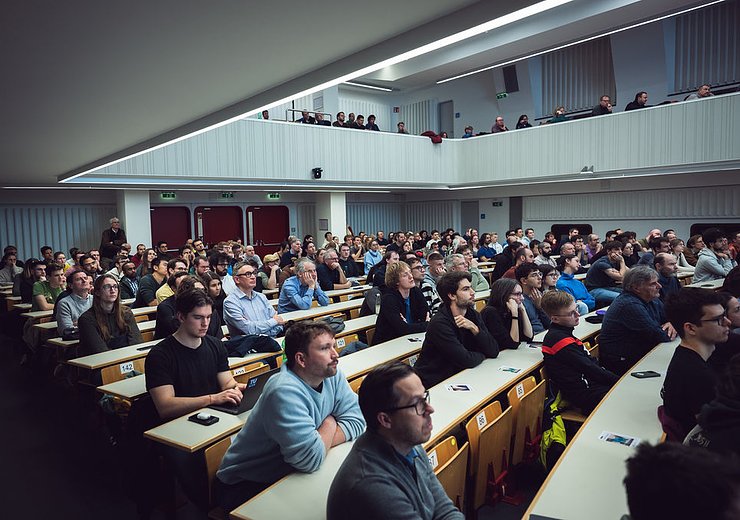
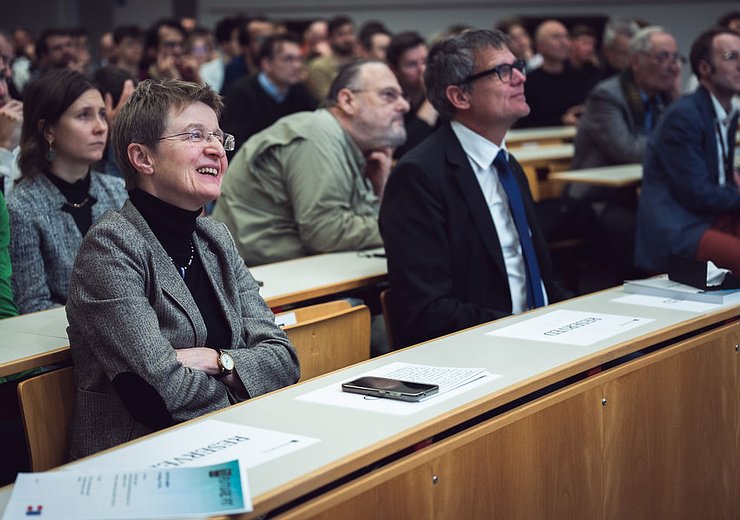
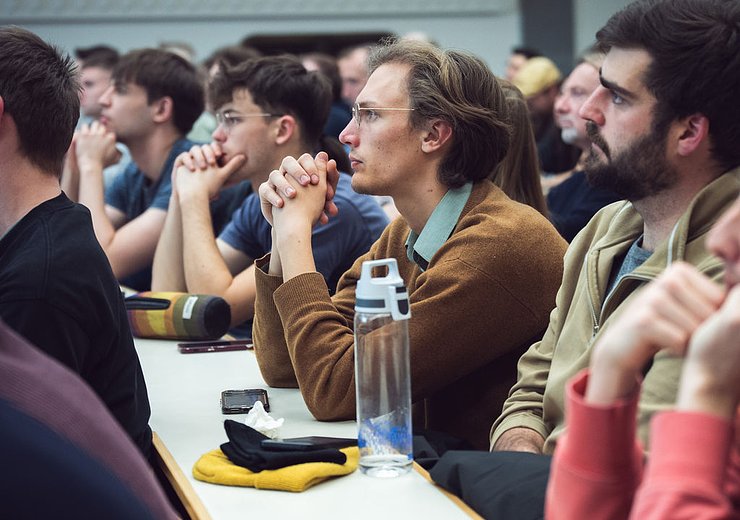
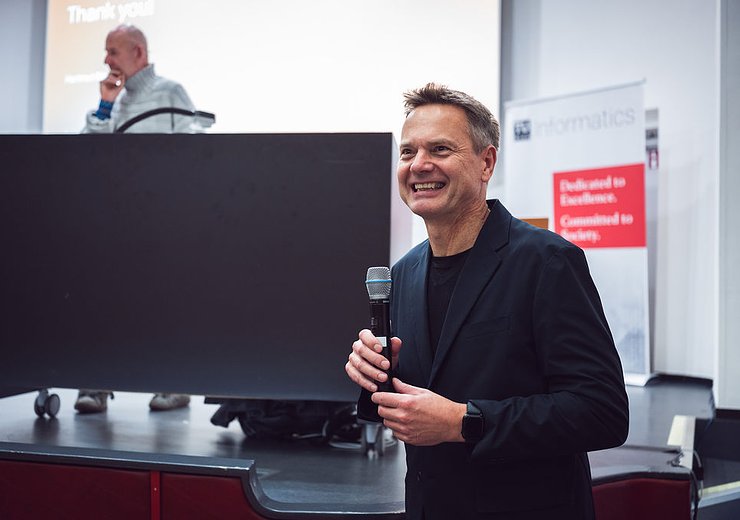
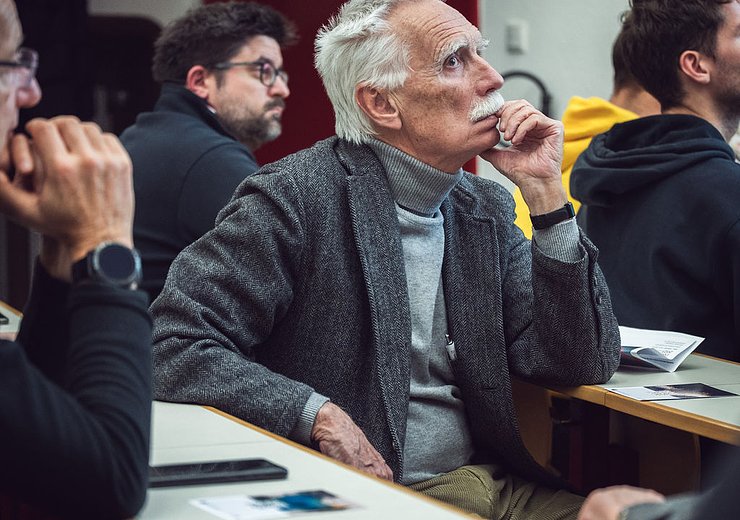
As the International Year of Quantum Science and Technology comes to a close, Hartmut Neven’s lecture provided a fitting conclusion—showing both how much quantum computing has already achieved and how clearly its future directions are now coming into focus. Neven’s insights could not have been more timely, coming in the same year we celebrated the launch of our new master’s program Quantum Information Science and Technology, which allows students to engage with the scientific foundations and emerging applications shaping the field.
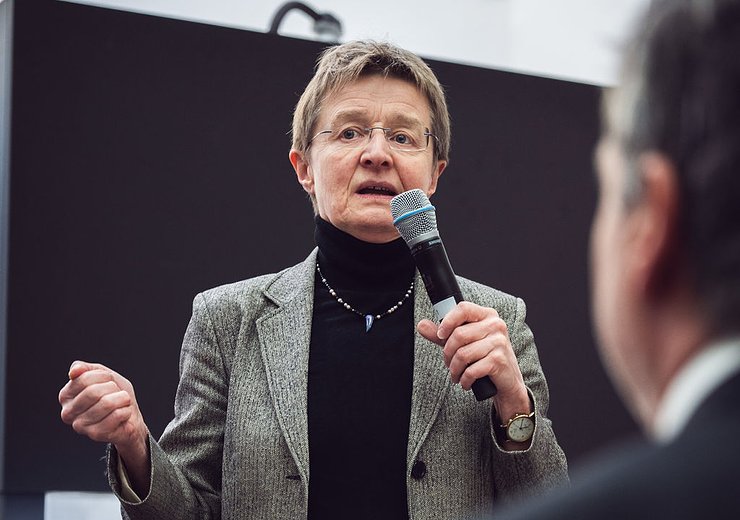
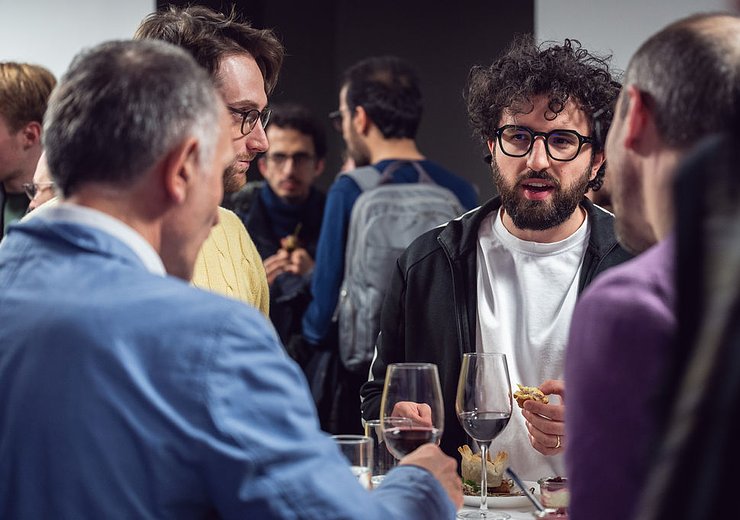
Our thanks go out to everyone who attended the event, especially to the Rector of TU Wien Jens Schneider and our Dean Gerti Kappel for their welcome addresses, as well as to host Stefan Szeider.
We also want to extend our special thanks to Hartmut Neven for his captivating and insightful lecture on all the possible futures that Quantum Computing holds in store for us.
Watch the full Vienna Gödel Lecture with Hartmut Neven:
Watch on YouTube: https://youtu.be/4IWI2QX-_wo
Hartmut Neven was also a keynote speaker at this year’s LogicLounge, hosted by the Vienna Center for Logic and Algorithms (VCLA), where talked about what happens when computers go Quantum.
About Hartmut Neven
Hartmut Neven is Founder and Lead of Google Quantum AI, and a Vice President of Engineering at Google. He leads the Quantum Artificial Intelligence lab, which he founded in 2012. Neven coined the terms Quantum Machine Learning and Quantum AI and implemented the first machine learning and image recognition algorithms on a quantum computer in 2007. In 2019, the Quantum AI team made history by demonstrating that a quantum computer can solve a computational problem that is intractable for classical computers. His teams were the first to physically instantiate time crystals, non-Abelian anyons, and traversable wormholes using a quantum processor.
Hartmut started two computer vision companies, the second of which was acquired by Google in 2006. His company Neven Vision achieved world firsts by launching face login, face filters and visual search for mobile phones. At Google, he led the Visual Search team and co-founded Project Glass, building its first prototype in 2011. His work earned recognition and awards in visual recognition competitions.
Hartmut studied Physics and Economics in Brazil, Köln, Paris, Tübingen, and Jerusalem, obtaining his Ph.D. in 1996, focusing on autonomous mobile robots and self-driving cars. Neven’s research interests often venture into scientific and philosophical frontiers long before they gain popularity. In 1992, he wrote a master’s thesis on neural dynamics for object recognition, and in 2003, he patented the technique of analyzing images taken by mobile phones with neural networks. In 2012, the concept of adversarial images was born in his team, paving the way for deep dream art. In 2014 he ventured into quantum biology by designing neurotransmitters and psychedelics using isotopes and quantifying their effects on neuroreceptors. Recently, with academic collaborators, he initiated a research program to experimentally test the conjecture that quantum processes create conscious experience.
Fast Company has recognized Hartmut as one of the world’s most creative individuals.
Beyond his scientific pursuits, Hartmut loves to travel the world with his wife and two sons. His most exciting journeys are to the Amazon rainforest, where he works with indigenous communities to help them preserve and monetize their knowledge of medicinal and entheogenic plants. Hartmut loves building art for Burning Man, is a glider plane pilot, and an unremarkable surfer and snowboarder.
About Vienna Gödel Lectures
Named after the famous Austrian-American logician, mathematician, and philosopher Kurt Gödel (1906-1978) and introduced in 2013, the annual Vienna Gödel Lectures bring world-class scientists to Vienna. The lecture series illustrates computer science’s fundamental and disruptive contribution to our information society, and it investigates how our discipline explains and shapes the world we live in—and thereby, our lives as such.
Curious about our other news? Subscribe to our news feed, calendar, or newsletter, or follow us on social media.