
#5QW: Emma McDonnell
“The structure of research is often such that I get to be the shepherd of a lot of other people’s perspectives, and I think that’s an awesome responsibility.”
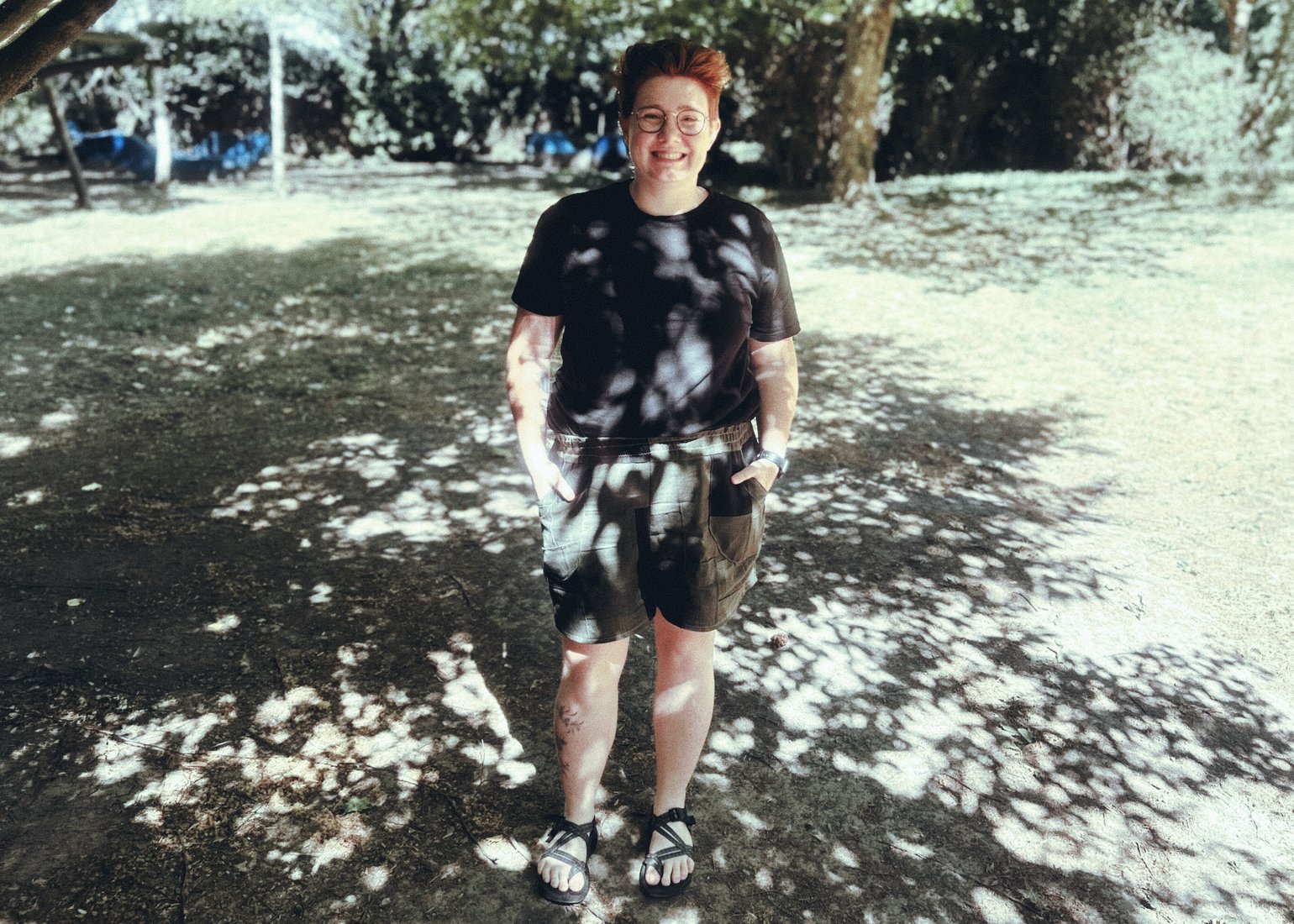
Picture: TU Wien Informatics
How would you describe your work in 90 seconds?
I’m an accessibility researcher. I’m interested in how we make technology more usable and useful to people with disabilities, and I’m trying to expand who and what we think of when we think about access tech. There’s a tradition of thinking about the same disabilities that were centered in many rights movements, e.g., people who are blind, deaf, people who use wheelchairs - and that’s a really important group to serve, but when we only serve that group, there are also a lot of people we don’t serve. So one of my areas of research is expanding into populations we haven’t historically considered. Right now, I’m doing a lot of work with people with chronic health conditions, who may not always identify as people with disabilities, but increasingly do. There are also a number of people who, regardless of identification, are experiencing lifelong accessibility needs that their medical providers are unequipped to see as such. About one in three people worldwide has a chronic health condition. Not everybody with a chronic health condition is experiencing it in a way that creates significant access barriers in their everyday life, but a lot of people are. I started doing this work because I developed a chronic health disability while working on my PhD and I want people who aren’t accessibility experts to have the tools I was able to turn to when I became disabled.
The other area of my research is how we think about who uses accessible technology. We often think about it as technology for people with disabilities, but especially in interactive contexts, when we only design for people with disabilities, we make the work of access siloed. I work extensively on communication access, especially with people who are deaf or hard of hearing. Almost all existing tech for communication access must be arranged by deaf and hard-of-hearing people and is used only by them. I think that’s fundamentally unjust and an oversimplified way of thinking about communication. If we’re in a conversation, I think it’s just as much my responsibility to ensure that I am understood as it is to understand you.
So I’m thinking about how we could help hearing people change their behaviors and take on more of the work of access. This doesn’t have to apply to all contexts–most people wouldn’t want to figure out how to use bespoke technology with every barista they order a coffee from, but we don’t spend most of our days talking to baristas. We spend most of our days talking to the people we love, or people we tolerate, or people we have some degree of an established relationship with, and there’s no reason that technology couldn’t target those established relationships.
How did you get in touch with informatics?
When I was a high schooler in the US, I had a lot of interests (American high schools are really good at supporting that). I was pretty convinced that I wanted to do a degree in art history, and my mom was pretty convinced that one should get a college degree with at least 500 jobs available when you graduate. And at that same time, I was spending one or two hours a day with students with disabilities in my high school. As a sophomore in high school, I convinced my guidance counselor to enroll me in adaptive physical education as a student helper. And I had definitely shown up thinking ‘I’m here to be a helper,’ but over time the disabled students in my gym class just became my friends. When hanging out with this new group of friends, I got used to communicating with people using Augmentative and Alternative Communication apps on their iPad, as well as some sign language, English, and variants on spoken English.
Before my senior year of high school, my mother pointed out that “someone builds the iPad that your friends use to communicate—that’s a job.” I thought, huh, that is a job. What if I did that instead of art history? So I applied to engineering school. I had an incredible computer science teacher who became my undergraduate advisor. I began researching accessible technology, the area I already wanted to pursue. An undergraduate research project idea became the foundation of my dissertation: how can we think about access as something people create together, rather than something disabled people have to manage alone?
The idea began when I attended an aural rehabilitation class for people who had recently lost their hearing. The focus was on teaching them how to adapt—how to ask others to communicate differently. I remember thinking: if other people’s communication skills are the problem, why are we only teaching deaf and hard-of-hearing people to change? How can technology help shift that responsibility? This connects deeply to ableism—the assumption that the non-disabled world does not need to change and that non-disabled ways of doing things are inherently better. They are not. Practices like looking at someone while speaking, slowing down, taking turns, and not talking over each other are simple, better ways to communicate.
To me, this is also a political question: who are we asking to change, and whose comfort are we prioritizing?
Where do you see the connection between your work and everyday life?
A lot of my research is about everyday life, and I have two answers for the different parts of my work. For communication access, I think some of it is about reimagining how we think we are responsible to each other, because part of challenging who we design technology for is challenging how we think access should work. In this work, I draw from Disability Justice, an activist movement led by Black, indigenous, and people of color who are often also trans, queer, and disabled. They name two concepts called collective access and interdependence.
Interdependence is the idea that nobody is actually independent; everyone depends on each other to move through the world. However, dependence gets treated as something that is unique to disability and needing to depend on others for everyday tasks is seen as uniquely shameful. There have been decades of disabled people’s activism focused on independent living, and sometimes independence is the appropriate goal. But then there are so many things we could think of as not being bad to have to do together. Collective access, to me, means thinking about access as something for all of us, and interacting with each other in a more collective manner, rather than in an “I take care of me, you take care of you” manner.
Oftentimes, when we do accessible technology research, we think of digital accessible technologies. There, the focus often lies on workplace or professional activities, which are incredibly important. But we have largely left out activities of daily living, so, being able to get yourself a cup of water, being able to get to the bathroom, and being able to leave your house; those stay in a more rehabilitative sphere. People in rehabilitative spaces are doing some accessibility work, but it is still done within the frame of medical care. The inherent idea of rehabilitation is that you’re trying to get better, that you’re working towards this future you. And one of the things that digital accessibility has done really beautifully is engage more with the disability rights movement, which says you don’t have to be different to deserve access right now.
I’m thinking about how we can capture the experience of living with a chronic health condition that you wish were better managed than it is. Working toward better management with your medical provider is a completely reasonable and appropriate goal, but that improvement may never come—or it may take years. In the meantime, how can we make your life something you can live the way you want to? That means bringing an accessibility mindset, informed by the history of disability rights, into everyday life. How can we make it possible for you to get to the bathroom? How can you cook the meal that connects you to your culture and your family? How can we enable you to get to work and do everything else that matters to you?
What makes you happy in your work?
I love mentoring. I’ve had the gift to be able to work with students who are not traditionally represented in STEM, even within Human-Computer Interaction (HCI). Most of my day-to-day, I get to read, I get to write, I get to think, I get to talk with people who are also really interested in what I do. I take the responsibility for learning from disability communities very seriously.
I never want to speak for others, and the structure of research is often such that I get to be the shepherd of a lot of other people’s perspectives, and I think that’s an awesome responsibility. I got to present the work that I had done with participants at the American Medical Informatics Association’s annual symposium last year about the benefits of a disability identity for someone with a chronic health condition. I was trying to present to a medical audience that disability is not just the worst outcome for a chronic health condition, which is often how it’s framed. For example: ‘MS could progress into disability’ but in what world is MS not a disability already? And disability isn’t the worst thing that could happen to somebody. I was presenting participant’s stories and had a doctor come up to me afterward and say, “I had never thought about this before, and this is going to change how I treat patients going forward. Hearing these perspectives is going to change how I practice medicine.”
I think I can always continue to improve, and I am always trying to narrow that space between me as the arbiter of knowledge and the people I work with, but getting to learn from and contextualize knowledge from disability communities into spaces where it has not historically been recognized is something that I really love about my work.
Why do you think there are still so few women in Computer Science?
We saw computing as a woman’s profession when it was seen as menial work. The earliest histories of computing trace back to weaving looms, which are strongly associated with feminized labor, so computing was not seen as a place where intellectual work happened. Then, all of a sudden, men discovered computing and went, “Wait, this is really cool!”, so the professionalization of computer science happened mostly in male-dominated environments. When computing became the lifeblood of the digital cutting edge, all the structures of power that came with it were deeply biased and deeply connected to beliefs about who can and can’t be at the cutting edge.
I happened to do my PhD in Human-Centered Design and Engineering at the University of Washington, a department where men are only about 1/3 of the faculty, and I think it is not coincidental that opportunities for women and nonbinary people to advance in computer science happen in spaces of computer science that are deemed to be less technical. Human-computer interaction research is often incredibly technical, but it is reductive to value only technical skill. I think the perception that anything involving people is a soft skill is fundamentally gendered, and it would explain why HCI is often where women and nonbinary people in the field encounter less resistance and therefore find that showing up to work every day is not as much of a fight. I think we saw this brief moment of reckoning, though, and were starting to improve.
I am less convinced that contemporary AI and AGI can be transformed in the same way, because they are also tied to histories of eugenics. The ways we have measured human intelligence have long been connected to projects of incarcerating, sterilizing, and removing autonomy from people with disabilities. The history of quantifying intelligence is deeply intertwined with racist and ableist ideas about humanity. When you start pulling at the threads of the house of cards that is AI, you quickly encounter deeper issues of racism, ableism, and sexism. I worry that a future of informatics anchored in AI will further entrench a hostile culture to those whose lived experiences are outside of a very narrow norm.
Emma McDonnell is a postdoctoral researcher at the Research Unit Human Computer Interaction at TU Wien Informatics. She is a fellow of the Austrian Academy of Sciences’ (ÖAW) APART-USA program, which supports outstanding postdoctoral researchers from the US who wish to relocate their research activities to excellent research locations in Austria.
Discover the whole #5QW series.
Curious about our other news? Subscribe to our news feed, calendar, or newsletter, or follow us on social media.