
#README: Inaugural Lectures 2026
On April 27, we had the pleasure of welcoming our new Professors Jürgen Cito, Tobias Fiebig, and Peter Knees to the faculty at their Inaugural Lectures.
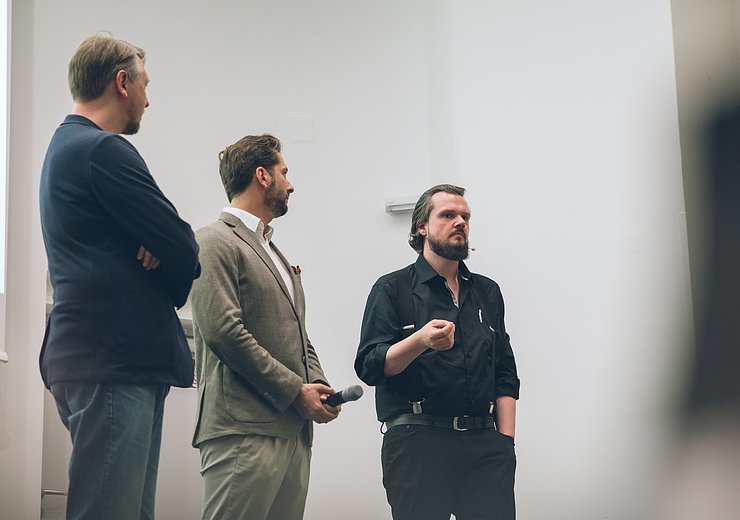
We had the pleasure of officially welcoming three outstanding new full professors during this year’s Inaugural Lectures at the end of April: Jürgen Cito, Tobias Fiebig, and Peter Knees. The evening began with an opening address by Vice Rector Academic Affairs, Jasmin Gründling-Riener. In her opening remarks, she highlighted the long-standing tradition of inaugural lectures at German-speaking universities and emphasized TU Wien Informatics’ commitment to research excellence, innovation, and socially responsible technological development. She also underlined the strategic importance of appointing outstanding researchers in future-oriented fields, noting that the three professors represent key areas shaping the future of computer science and academia. Throughout the evening, Dean Gerti Kappel guided the program as moderator, introducing each newly appointed professor with short biographies, personal anecdotes, and insights into their academic journeys and research achievements.
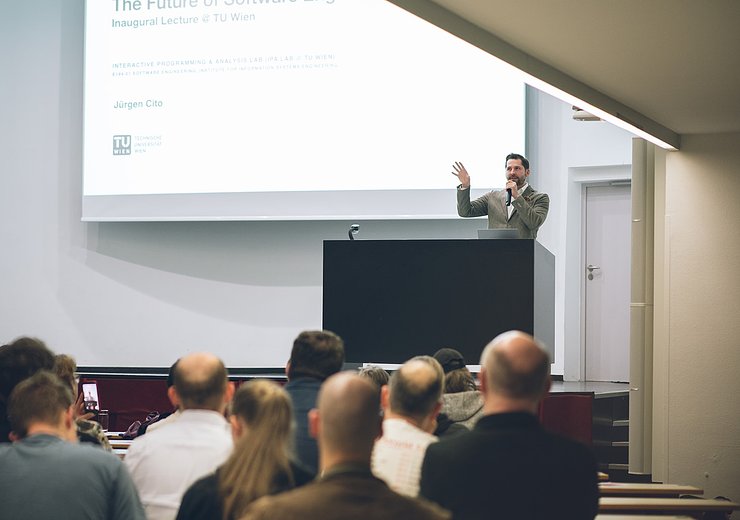
In the first lecture of the evening, Jürgen Cito examined the rapidly changing landscape of software engineering in the era of artificial intelligence. Challenging the common assumption that AI will replace human programmers, he argued that engineering under real-world constraints such as correctness, security, and reliability has become more important than ever. Drawing on his research, he presented AI-supported approaches for analyzing software performance, explaining machine learning predictions, and automating large-scale program repair through agentic systems. He also presented work on specification inference, including the tool Panini, which transforms opaque source code into declarative specifications, thereby making increasingly complex AI-generated systems more comprehensible and easier to verify. Throughout the lecture, Jürgen Cito emphasized the importance of trust, explainability, and abstraction in AI-assisted software development, particularly as software systems continue to grow in scale and complexity. He concluded with a vision for the future of computer science education in which AI acts as a collaborative development partner. At the same time, students are trained in systems thinking, validation, verification, and architectural reasoning.

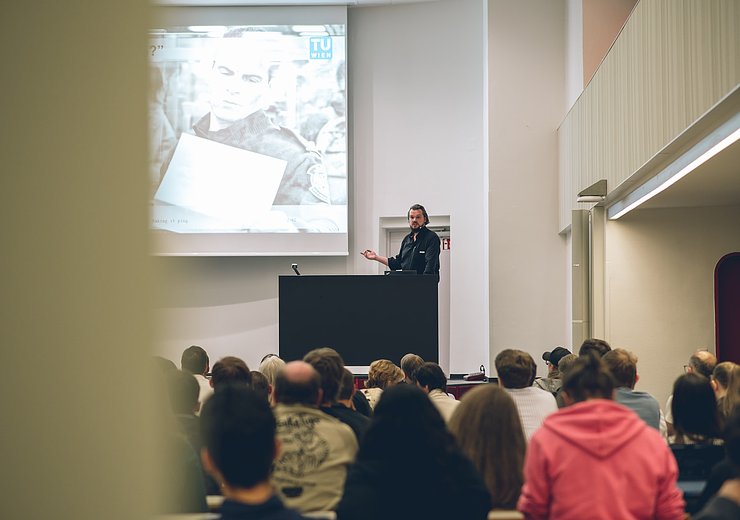
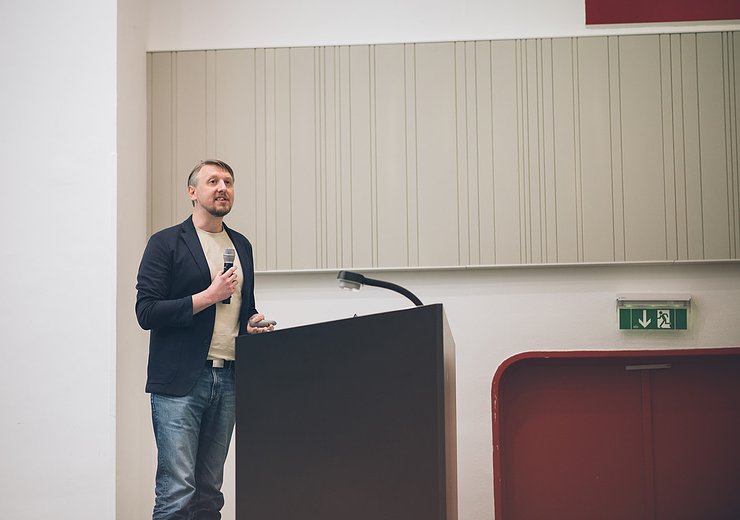
The evening continued with Tobias Fiebig’s lecture, which offered insights into the complex infrastructures underpinning today’s internet. Moving beyond purely technical networking mechanics, he demonstrated how architecture, economics, and politics are deeply intertwined within digital infrastructures. Drawing on empirical measurements and standards-related work, he showed how data-driven evidence contributed to overcoming long-standing resistance to improved IPv6 support in the Domain Name System (DNS). He also addressed questions of digital sovereignty and the growing migration of essential academic infrastructure into commercial cloud environments. Throughout the lecture, he connected technical resilience with organizational culture, emphasizing that secure and reliable systems depend on inclusive environments that support transparency and learning from failure. Throughout the lecture, he connected technical resilience with organizational culture, emphasizing that secure and reliable systems depend on inclusive environments that support transparency and learning from failure. Framing his work across these interconnected layers, he concluded with a succinct reflection on his research unit’s mission: making it ping.
The final lecture of the evening was delivered by Peter Knees, who explored data-intensive digital systems through the lens of music information retrieval and recommender systems. He presented recent research on sequential recommendation models, showing how incorporating negative feedback—such as skipped tracks—can substantially improve recommendation quality. At the same time, he reflected on the biases embedded in datasets, noting that platform-driven data often shapes what can be studied and may not fully represent user behavior or musical diversity. Expanding beyond technical considerations, he emphasized that recommendation systems involve competing interests among different stakeholders, raising fundamental questions of power and fairness in digital ecosystems. In conclusion, he stressed the importance of interdisciplinary approaches, aligning with the principles of Digital Humanism to ensure that technological development remains transparent, accountable, and centered on human values.
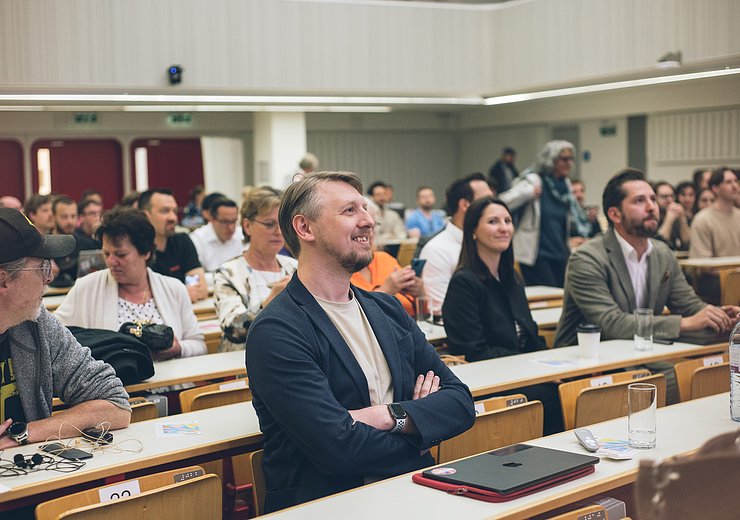
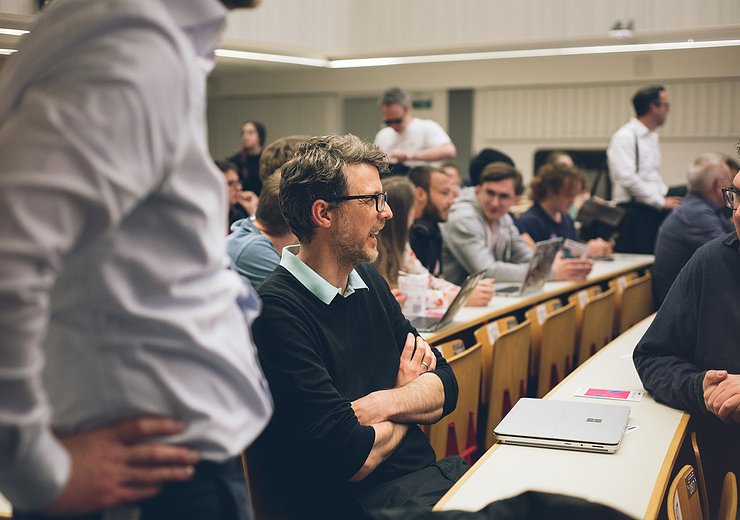
All three inaugural lectures showcased our commitment to excellent research that is deeply connected to societal needs and human values. Following the lectures, the newly appointed professors engaged the audience in an open discussion, and the evening concluded with a networking reception that brought together faculty members, students, researchers, and guests for further exchange and conversation.
Curious about our other news? Subscribe to our news feed, calendar, or newsletter, or follow us on social media.