

About
AI increasingly augments research practices, redefines scientific workflows, and changes teaching and training—requiring new skills, ethical frameworks, and collaborative infrastructures across disciplines.
Engaging with these changes is essential: AI already permeates daily life and has fundamentally altered how science and engineering are practiced, from data collection and analysis to experiment design, simulation, and validation. Understanding AI’s capabilities and limits helps researchers build systems that are safe, robust, and equitable. It also informs how we teach and train the next generation—integrating responsible innovation and interdisciplinary collaboration so that the scientific and engineering communities can advance AI that serves people and strengthens the foundations of science and engineering.
Our public lecture series AI in Science and Engineering explores how AI is transforming these disciplines and features lectures by the internationally renowned scientists Edith Elkind, Kristian Kersting, Kate Smith-Miles, Matthias Scheutz, and Shahar Mendelson. Bringing together computer science, mathematics, engineering, and science in general, the series highlights how AI is reshaping discovery, design, and deployment in science and engineering.
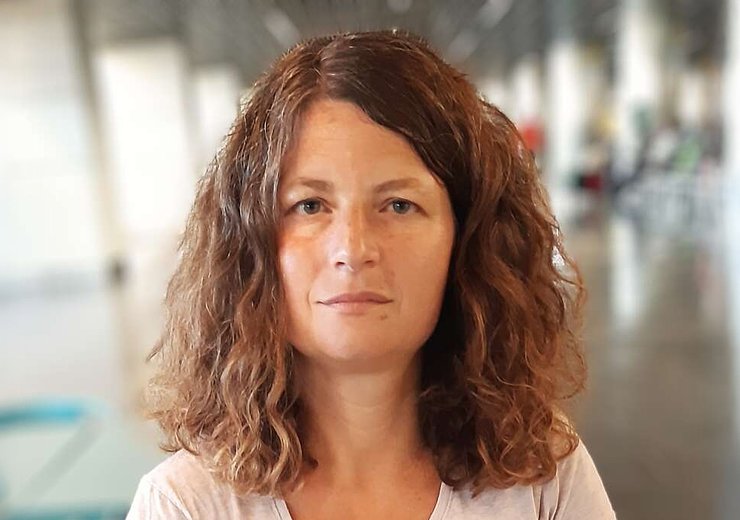
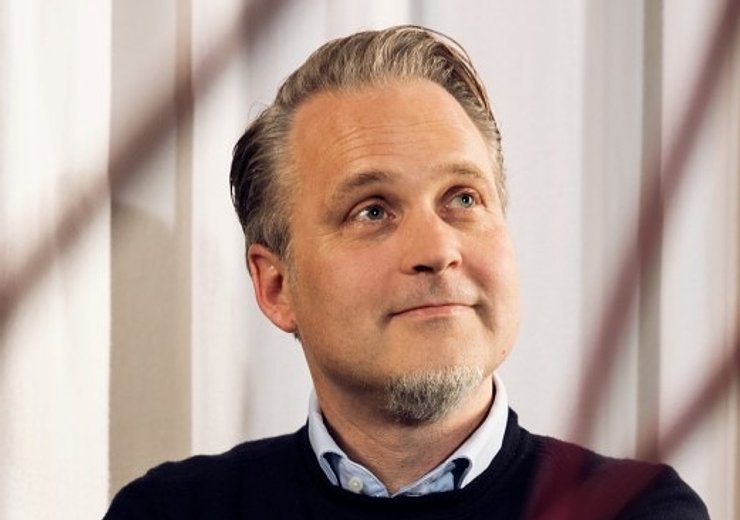
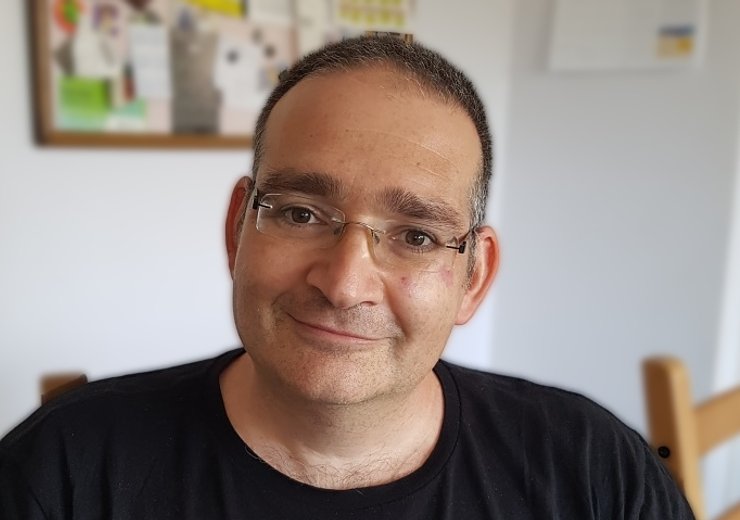
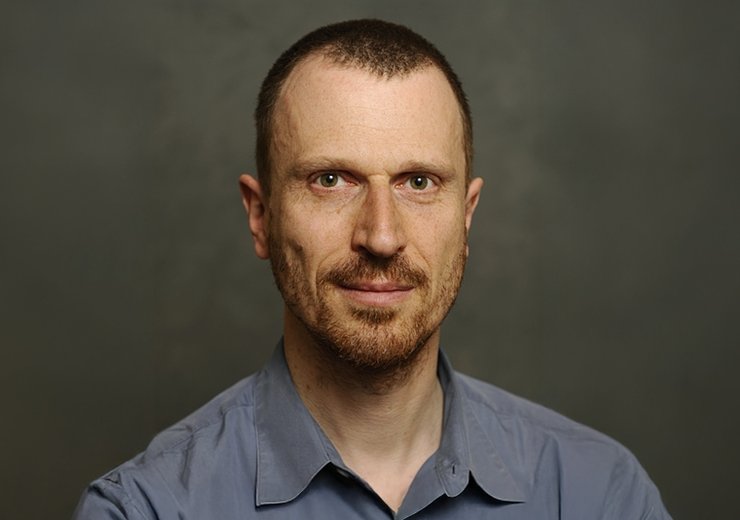
All lectures take place in TU Wien’s beautiful Festsaal, and are also streamed via Zoom. For details, please see individual lecture announcements below.
Lectures
February 5, 2026, 10:00-11:30 — Edith Elkind
Northwestern University
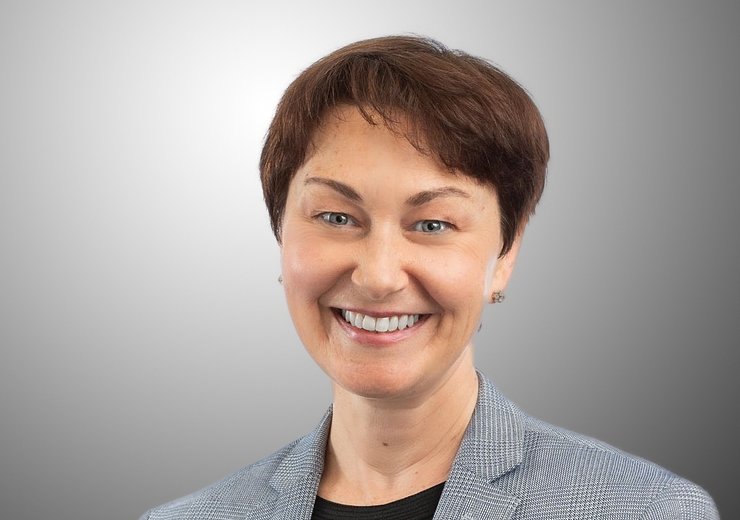
Edith Elkind is a Ginny Rometty Professor of Computer Science at Northwestern University. She obtained her PhD from Princeton in 2005 and worked in Israel, Singapore, and the UK before joining Northwestern in 2024. She works on strategic foundations of multiagent systems, with a focus on algorithms for collective decision making. Her book “Computational aspects of cooperative game theory” is a standard reference for the respective field. She is a recipient of an ERC Starting Grant, the SIGAI Autonomous Agents Research Award and is a Fellow of EurAI and ELLIS. She served/is serving as a chair of multiple leading conferences in AI and algorithmic game theory (including IJCAI, AAAI, ACM EC, AAMAS, WINE and COMSOC), and is currently an editor in chief of the Journal of AI Research.
March 12, 2026, 14:00-15:30 — Kristian Kersting
Technical University of Darmstadt
Professor Dr. Kristian Kersting is a co-director of the Hessian Center for AI (hessian.AI), head of the research department “Foundations of Systemic AI” at the German Research Center for AI (DFKI), and a professor of AI and Machine Learning at TU Darmstadt. After receiving his PhD at the University of Freiburg in 2006, he was with MIT, Fraunhofer IAIS, the University of Bonn, and TU Dortmund University. He is a Fellow of the Association for the Advancement of AI (AAAI), the European Association for AI (EurAI), and the European Lab for Learning and Intelligent Systems (ELLIS), a book author (“How Machines Learn”), and received the inaugural German AI Award 2019. He wrote a regular AI column in the German newspaper Welt (am Sonntag).
March 16, 2026, 10:00-11:30 — Kate Smith-Miles
University of Melbourne
Professor Kate Smith-Miles is a Melbourne Laureate Professor of Applied Mathematics at the University of Melbourne, where she is also Pro Vice-Chancellor (Research Capability), responsible for supporting researchers across all disciplines to deliver research of the highest quality, integrity and impact. She also works closely with industry as Director of the ARC Training Centre for Optimisation Technologies, Integrated Methodologies and Applications (OPTIMA). Kate is internationally recognized for her contributions to optimisation, neural networks, machine learning, applied mathematics, and the development of methodologies for trustworthy algorithm evaluation. Her research has pioneered Instance Space Analysis, a framework that reveals when and why algorithms succeed or fail across diverse problem landscapes. This work led to the creation of MATILDA, an online platform supporting rigorous algorithm benchmarking and transparent stress‑testing. Kate has published two books and over 300 refereed papers, supervised more than 30 PhD graduates, and attracted over AUD$70 million in competitive research funding. She has received numerous medals and awards for her research, including a prestigious Australian Laureate Fellowship. She is a Fellow of the Australian Academy of Science, a former President of the Australian Mathematical Society, and was appointed an Officer of the Order of Australia in 2024 for distinguished service to applied mathematics and advocacy for women in STEM.
March 19, 2026, 10:00-11:30 — Matthias Scheutz
Tufts University
Matthias Scheutz, is the Karol Family Applied Technology Professor of computer science and mechanical engineering in the Department of Computer Science at Tufts University in the School of Engineering, the Director of the Human-AI Interaction Center at the Tufts Institute of Artificial Intelligence, and the Director of the Human-Robot Interaction (HRI) Laboratory and the HRI Masters and PhD programs. He is a AAAI and AAAS Fellow with close to 500 peer-reviewed publications in artificial intelligence, artificial life, agent-based computing, natural language understanding, cognitive modeling, robotics, human-robot interaction and foundations of AI and cognitive science. His current research focuses on complex ethical AI-enabled robots with natural language interaction, problem-solving, and fast instruction-based learning capabilities in open worlds.
March 24, 2026, 10:00-11:30 — Shahar Mendelson
Texas A&M University
Shahar Mendelson studies the mathematical foundations of AI and data science. He has been making seminal contributions to the area over three decades, with far reaching implications in machine learning, high dimensional statistics and related aspects of signal processing. Mendelson identified the surprising fact that certain crucial aspects of data science are actually deep mathematical questions in high-dimensional geometry – an area of pure mathematics that explores (counter-intuitive) phenomena that occur when the dimension of the space becomes very large. Thanks to his discovery and the mathematical machinery he has been developing, Mendelson solved some of the most difficult, long-standing open problems in mathematical data science. Mendelson was awarded the medal of the Australian Mathematical Society in 2008 (the highest award given by the AustMS to researchers under the age of 40), and was elected to the Australian Academy of Science in 2024. He holds the Thomas W. Powell ’62 Chair for Science at Texas A&M University, and previously held professorship positions at the Australian National University, Technion-I.I.T, and the University of Warwick, and the Excellence Chair in Artificial Intelligence at Sorbonne University.
Curious about our other news? Subscribe to our news feed, calendar, or newsletter, or follow us on social media.